


Other Resources
ALL ARTICLES


Help Center


Below you will find a number of topics ranging from personal to business banking.

It’s November, your store is packed, the line at the register is snaking down the aisle and your seasonal staff is doing their best to keep up. You’re watching every sale, every return and every refund, knowing that the next six weeks can make or break your year. With card processing fees climbing, it’s tempting to push customers toward cash and even add a 3% “convenience” or “non-cash adjustment” fee when they tap or swipe a card. After all, there are no fees on cash… right?
The problem is that cash comes with its own price tag, one most retailers don’t see until it’s quietly eaten into their margins.
A study by the Small Business & Entrepreneurship Council found that the real cost of cash can range from 4.7% (grocery) to as high as 15.5% (bars and restaurants) once you factor in labor, handling and shrinkage. That means for every $100 in cash you accept, you might really be keeping only $84.50 to $95.30.
For many retailers, the biggest hidden cost is time:
For example, convenience stores—which operate in a similar high-volume, low-margin environment as many retailers—spend an estimated 15–20 hours per week just counting and handling cash. At an average wage of $14.33 per hour, that’s:
Over a year, that works out to $11,177–$14,903 in labor just to handle cash. During the holidays, when lines are longer and staff is stretched thinner, those hours often go up, not down.
Cash also keeps you in the dark longer than you might realize. With cash-heavy operations, you often don’t know your true daily performance until drawers are counted, deposits are prepared and everything is reconciled—sometimes hours after the store closes. That lag makes it harder to adjust staffing, reorder inventory or tweak promotions while it still matters.
Electronic payments, by contrast, can feed real-time metrics into your point-of-sale and treasury platforms. You can see, often down to the hour, what’s selling, which locations are busiest, which promotions are working and how your cash flow looks heading into the next day. That visibility is especially valuable in the holiday rush, when a fast decision about staffing or inventory can mean the difference between a record weekend and missed opportunities.
On top of labor, cash exposes retailers to risks that electronic payments help reduce:
This is why many banks are rolling out treasury platforms with fraud controls, positive pay, ACH options and remote deposit capture to help business customers move away from “cash management” and toward cash flow management. Framing the conversation around speed, security, real-time information and time savings can be more effective—and more honest—than simply pushing for “more cash.”
Let’s apply real numbers to a typical retail scenario.
Say you own a store and decide to add a 3% convenience fee to card transactions while still accepting cash. Here’s what happens on a $100 ticket:
Card payment with a 3% convenience fee
Cash payment with hidden costs (using the 15.5% example)
So for every $100 transaction, you effectively keep:
That’s a $15.41 difference per $100 ticket in favor of electronic payments.
During the holidays, when your volume spikes, that gap adds up quickly. The season you’ve been counting on to boost profits can quietly turn into the season where hidden cash costs quietly steal them away, one transaction at a time.
If you’d like to talk through how to reduce the hidden costs of cash, improve fraud protection and gain better real-time visibility into your business accounts and merchant processing, contact Surety’s Treasury Services Department to discuss business accounts and merchant accounts with built-in protection.



This is a fictitious story—but it's based on real events that happen to small businesses every single day.
The owner of a thriving local furniture business had just signed the biggest deal of the year. Everything seemed on track until her bookkeeper received an email from a familiar client with “updated wire instructions.” The message looked legitimate. No red flags. So the payment—nearly $50,000—was sent. Two days later, the real client called to say the deposit never arrived. The money was gone. And so was the illusion that something like this “would never happen to us.”
Within a week, long-time customers started asking tough questions. A supplier tightened payment terms. A local partnership quietly backed out of an event. And worse—people started whispering that the business “might not be secure.”
This is how quickly a single fraud incident can unravel years of hard-earned trust.
Even if you recover the stolen funds or file an insurance claim, the damage to your reputation can last far longer—and cut deeper.
Protecting your business starts with building strong internal controls and using the tools your bank offers:
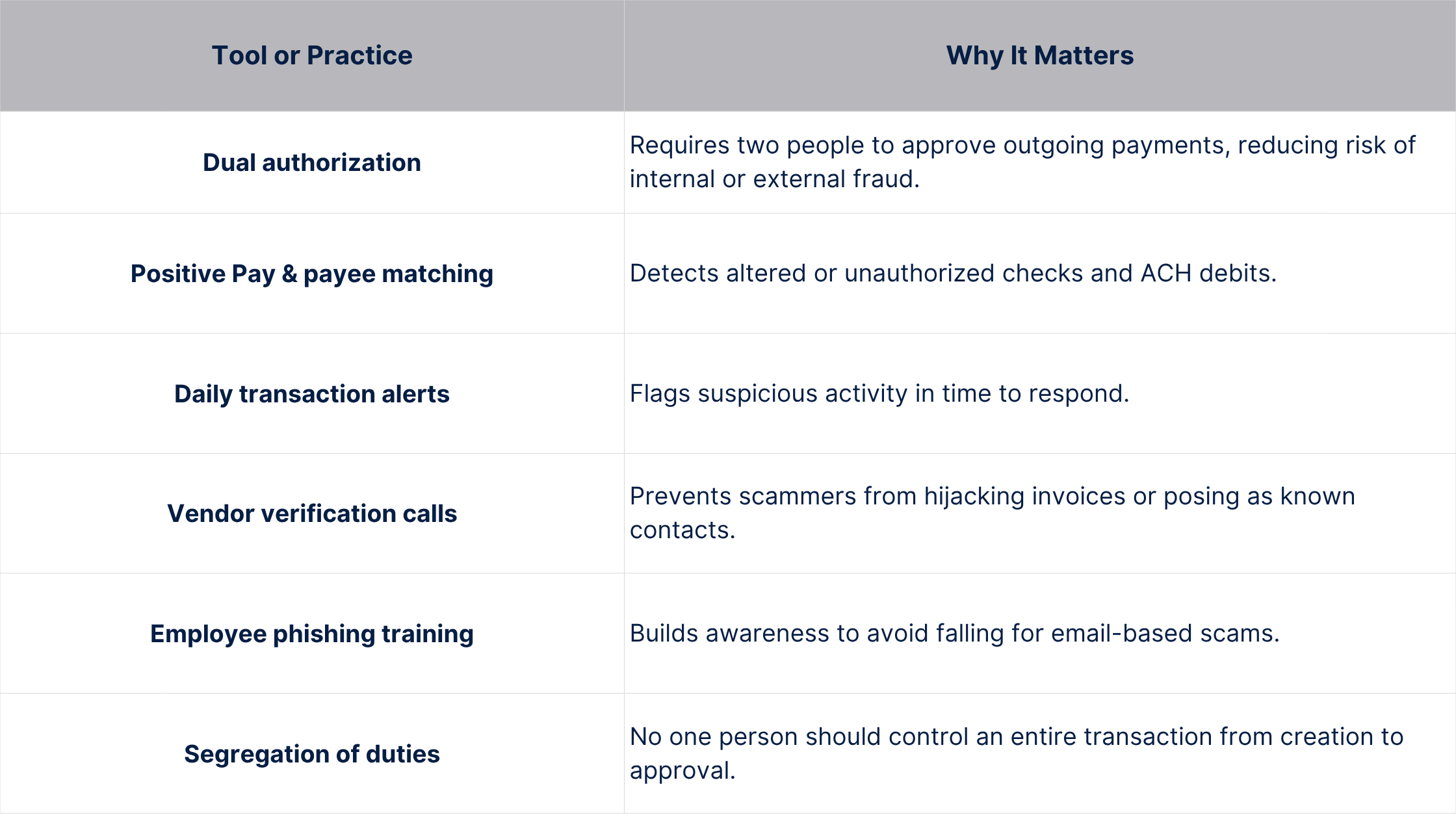
Surety Bank offers many of these solutions through our Treasury team, and we can help tailor them to your specific operations.
Even with great controls, no system is bulletproof. If fraud strikes, your response will determine how much damage your reputation takes—and how quickly you can recover.
In the first 72 hours:
In the weeks that follow:
This fictitious business was lucky—it survived. But the lesson is clear: fraud isn’t just a financial risk, it’s a reputational one. And once trust is broken, it takes time, strategy, and transparency to win it back.
At Surety Bank, we help businesses of all sizes protect their operations from fraud. Whether you need payment controls, alert systems, or a plan for what to do in a crisis, our Treasury & Fraud Prevention Team is here to help.

In the Summer 2025 issue of Building Central Florida Magazine, Surety Bank’s CEO Ryan James maps out a playbook for contractors battling the tariff-driven spikes in steel, aluminum, and other construction staples. James urges firms to replace one-job-at-a-time budgeting with rolling, company-wide cash-flow forecasts; to negotiate for delivery and payment flexibility; to lock in contingency capital before trouble hits; and to embed escalation clauses that keep margins intact—all while maintaining proactive, transparent communication with clients.
Read the full article on page 17:
Building Through the Turbulence – Building Central Florida Magazine

It’s easy to assume that in a digital world, check fraud is a thing of the past. But the reality is quite the opposite. In 2023 alone, check fraud losses in the Americas totaled a staggering $21 billion—representing 80% of all global check fraud cases. Despite a steady decline in the use of checks, fraudsters are doubling down on a still-vulnerable payment channel.
So what happens when a check your business issued ends up in the wrong hands?
Let’s say you wrote a vendor check back in February. Today, that check suddenly clears—but it’s been altered or stolen. What’s your next move? Do you catch it in time? Will your bank reimburse the loss? If you’re like many business owners, you’d expect your bank to take care of it. But depending on the terms in your bank’s Deposit Agreement, you may only have 30 days from the date of your statement to report the fraud and recover those funds. And once that window closes, so may your chances of getting that money back.
At Surety Bank, we want our business clients to know that help exists—and it's called Positive Pay.
Positive Pay is a fraud prevention tool that verifies checks presented for payment against a list of checks you’ve actually issued. If the details don’t match, the bank flags the check and reaches out before funds are released.
It’s like having a security checkpoint for every check your business issues.
Here’s what fraud can really cost your business:
Surety Bank’s Positive Pay solution is designed to reduce those risks before they become losses. Instead of waiting for fraud to strike, it gives business owners a chance to act first.
Most business owners don’t have the luxury of watching every check line item on their bank statement. Positive Pay works in the background—quietly checking, flagging, and helping you intercept fraud before it’s too late.
By offering this service, we’re not just protecting your account—we’re protecting your time, your reputation, and your peace of mind.
Check fraud isn’t going away. But your exposure to it can.
If you’re still issuing paper checks, it’s time to ask yourself: How am I protecting my business from check fraud? At Surety Bank, we’re ready to help you find the answer.
Reach out to our Treasury Management team to learn how Positive Pay can fit into your fraud prevention strategy.

Paper checks may feel old-school, yet they remain the easiest gateway for thieves. The U.S. Treasury reports that check-fraud suspicious-activity filings have climbed 385 percent since the pandemic, while 63 percent of companies faced attempted or actual check fraud in 2024, according to the Association for Financial Professionals’ 2025 survey.occ.govafponline.org Those numbers tell a blunt story: even as businesses adopt ACH and virtual cards, the humble check still opens a back door to five- and six-figure losses.
The phone lit up in the back office of Sunshine Custom Cabinets on a Thursday afternoon.
Co-owner Angela Moreno glanced at the caller ID from her bank and expected a routine wire inquiry. Instead she heard:
“Ms. Moreno, six checks just cleared your account for almost ten thousand dollars each. Can you confirm them?”
Angela had mailed only three checks that week, none over $4,500. Somewhere between the post-office drop box and her suppliers’ lockboxes, thieves had “washed” the envelopes, bleached the ink, and rewritten the checks for a cool $59,821.32—wiping out two payroll cycles in minutes.
The next 48 hours blurred into police reports, fraud affidavits, and tense conversations with employees wondering if Friday’s pay would arrive. The bank eventually credited most of the money, but cash flow froze for nearly a month, and the team sank forty billable hours into cleaning up—a cost no insurance policy reimbursed.
Check fraud has morphed from fax-era nuisance to organized, AI-enhanced side hustle. The good news: consistent, unglamorous discipline—secure mailing, rapid reconciliation, and an automated pre-clearance layer—sends fraudsters looking for softer targets. Angela calls that Thursday “the most expensive lesson I never budgeted for.” Tighten your routine today, and you won’t need the same wake-up call.
Need a practical walkthrough of daily controls—minus the jargon? Talk with our Treasury Management team about fitting these layers to your workflow before your next envelope hits the mail.

As more banking moves online, security has become just as important as convenience. Whether you’re checking a personal account or managing company finances, your computer habits play a critical role in keeping your information safe. A few consistent practices can greatly reduce your risk of fraud and protect sensitive data.
Malware can capture keystrokes, steal login credentials, and access personal files without you realizing it. To stay protected:
Make full use of the security tools your devices and bank provide:
Closing your browser window isn’t enough to end your session.
Browsers can store sensitive information like login pages or cached credentials. To protect yourself:
Phishing emails and fraudulent pop-ups can trick you into giving away banking information. Watch for:
Best practice: Always access your bank by typing the official web address directly into your browser, never through email or ad links.
Businesses face higher risks, so proactive steps are essential:
Online banking can be safe and reliable when paired with good cybersecurity habits. By:
…you can protect both your finances and your peace of mind.
The key is consistency. Security isn’t a one-time task—it’s a set of habits built into your everyday banking routine. Taking these steps ensures your accounts remain secure, your sensitive information stays private, and you can manage your finances confidently, whether personally or for your business.
It’s November, your store is packed, the line at the register is snaking down the aisle and your seasonal staff is doing their best to keep up. You’re watching every sale, every return and every refund, knowing that the next six weeks can make or break your year. With card processing fees climbing, it’s tempting to push customers toward cash and even add a 3% “convenience” or “non-cash adjustment” fee when they tap or swipe a card. After all, there are no fees on cash… right?
The problem is that cash comes with its own price tag, one most retailers don’t see until it’s quietly eaten into their margins.
A study by the Small Business & Entrepreneurship Council found that the real cost of cash can range from 4.7% (grocery) to as high as 15.5% (bars and restaurants) once you factor in labor, handling and shrinkage. That means for every $100 in cash you accept, you might really be keeping only $84.50 to $95.30.
For many retailers, the biggest hidden cost is time:
For example, convenience stores—which operate in a similar high-volume, low-margin environment as many retailers—spend an estimated 15–20 hours per week just counting and handling cash. At an average wage of $14.33 per hour, that’s:
Over a year, that works out to $11,177–$14,903 in labor just to handle cash. During the holidays, when lines are longer and staff is stretched thinner, those hours often go up, not down.
Cash also keeps you in the dark longer than you might realize. With cash-heavy operations, you often don’t know your true daily performance until drawers are counted, deposits are prepared and everything is reconciled—sometimes hours after the store closes. That lag makes it harder to adjust staffing, reorder inventory or tweak promotions while it still matters.
Electronic payments, by contrast, can feed real-time metrics into your point-of-sale and treasury platforms. You can see, often down to the hour, what’s selling, which locations are busiest, which promotions are working and how your cash flow looks heading into the next day. That visibility is especially valuable in the holiday rush, when a fast decision about staffing or inventory can mean the difference between a record weekend and missed opportunities.
On top of labor, cash exposes retailers to risks that electronic payments help reduce:
This is why many banks are rolling out treasury platforms with fraud controls, positive pay, ACH options and remote deposit capture to help business customers move away from “cash management” and toward cash flow management. Framing the conversation around speed, security, real-time information and time savings can be more effective—and more honest—than simply pushing for “more cash.”
Let’s apply real numbers to a typical retail scenario.
Say you own a store and decide to add a 3% convenience fee to card transactions while still accepting cash. Here’s what happens on a $100 ticket:
Card payment with a 3% convenience fee
Cash payment with hidden costs (using the 15.5% example)
So for every $100 transaction, you effectively keep:
That’s a $15.41 difference per $100 ticket in favor of electronic payments.
During the holidays, when your volume spikes, that gap adds up quickly. The season you’ve been counting on to boost profits can quietly turn into the season where hidden cash costs quietly steal them away, one transaction at a time.
If you’d like to talk through how to reduce the hidden costs of cash, improve fraud protection and gain better real-time visibility into your business accounts and merchant processing, contact Surety’s Treasury Services Department to discuss business accounts and merchant accounts with built-in protection.
As more banking moves online, security has become just as important as convenience. Whether you’re checking a personal account or managing company finances, your computer habits play a critical role in keeping your information safe. A few consistent practices can greatly reduce your risk of fraud and protect sensitive data.
Malware can capture keystrokes, steal login credentials, and access personal files without you realizing it. To stay protected:
Make full use of the security tools your devices and bank provide:
Closing your browser window isn’t enough to end your session.
Browsers can store sensitive information like login pages or cached credentials. To protect yourself:
Phishing emails and fraudulent pop-ups can trick you into giving away banking information. Watch for:
Best practice: Always access your bank by typing the official web address directly into your browser, never through email or ad links.
Businesses face higher risks, so proactive steps are essential:
Online banking can be safe and reliable when paired with good cybersecurity habits. By:
…you can protect both your finances and your peace of mind.
The key is consistency. Security isn’t a one-time task—it’s a set of habits built into your everyday banking routine. Taking these steps ensures your accounts remain secure, your sensitive information stays private, and you can manage your finances confidently, whether personally or for your business.

Cash flow is the lifeblood of any business. Whether you're managing a commercial construction firm or running a retail operation, understanding how money moves in and out of your business is key to long-term success. Poor cash flow management can leave businesses scrambling to cover expenses, even when profits look good on paper.
A recent episode of the Expandable Series discussed this in detail, but here are some fundamental cash flow principles, using commercial construction as an example, that apply to businesses across all industries.
1. Understand Your Cash Outflows
In commercial construction, significant cash outlays are required upfront for raw materials, permits, and labor. These costs must be covered well before payments from clients arrive. Similarly, in retail, manufacturers need to purchase inventory long before customers make a purchase.
A business must have enough cash on hand to cover these expenses. Without it, operations may stall, delaying projects and impacting profitability. Understanding your cash needs ahead of time ensures smoother financial management.
Example: Imagine a mid-sized construction firm, Apex Builders, takes on a new commercial office project. Before the first payment arrives, they must pay for steel beams, concrete, and skilled labor. Without proper cash reserves or a well-structured payment schedule, Apex Builders could struggle to cover these costs, potentially halting the project and damaging their reputation.
2. Time Your Cash Inflows Strategically
Revenue in commercial construction typically comes from milestone payments throughout a project or upon completion. However, these payments can be delayed due to contract terms, client approvals, or unexpected issues.
For any business, it’s essential to analyze how long it takes to convert expenses into revenue. Are you waiting 30, 60, or even 90 days to get paid? If so, your business must be structured to withstand these gaps. Ensuring that your contract terms align with your cash flow needs can prevent unnecessary financial strain.
Example: Apex Builders structures their contracts to ensure payments are received at key milestones—such as after the foundation is laid, after framing is completed, and upon final inspection. By planning these payment intervals, they reduce financial stress and ensure they always have working capital.
3. Build a Cash Buffer
One of the best strategies for managing cash flow is to build a buffer that accounts for timing discrepancies. In construction, this means having enough reserves to cover payroll and material costs while waiting for payments. The same principle applies to any business with delayed payments.
This buffer should be built into your pricing. Instead of operating on razor-thin margins, factor in potential delays and unexpected costs when setting your rates. This ensures financial stability even during slower payment periods.
Example: Apex Builders includes a 10% contingency in their project bids, ensuring that if a client delays payment or unexpected costs arise, they have the liquidity to keep operations running smoothly.
4. Plan for Payroll and Fixed Expenses
Payroll is a non-negotiable expense in any business. Employees expect timely paychecks, and failure to meet payroll obligations can lead to operational disruptions and even legal consequences.
Since payroll and other fixed expenses (like rent, utilities, and insurance) don’t change based on revenue fluctuations, they must be accounted for in advance. Forecasting these expenses over the next quarter will help ensure you always have the necessary funds available.
Example: Apex Builders schedules payments from previous projects to help cover payroll during slow months, ensuring that employees are always paid on time.
5. Look Ahead to the Next Quarter
Successful businesses don’t just think about today’s cash flow—they plan for the next quarter and beyond. What projects are in the pipeline? When will revenue from those projects be realized? What expenses need to be covered in the meantime?
By forecasting cash flow and preparing for potential shortfalls, businesses can make informed decisions about when to invest, when to hold back, and when to seek additional financing options to bridge any gaps.
Example: Apex Builders maintain a rolling cash flow projection, helping them anticipate slow periods and ensuring they never take on more projects than they can financially support at one time.
The Bottom Line
Cash flow management isn’t just about tracking numbers—it’s about planning ahead, building flexibility into your pricing, and ensuring your business can withstand the natural ebbs and flows of financial cycles. Whether you’re in commercial construction, retail, or any other industry, mastering cash flow is essential for long-term success. Surety Bank is here to help businesses navigate these challenges with financial solutions designed to keep operations running smoothly.

Forget Growth for Growth’s Sake. Scale Your Company With Purpose!
Every business owner dreams of growth—the big contracts, the expanding team, the larger facility. Growth is exciting, but what happens when it outpaces your ability to sustain it? For small to mid-sized business owners, the challenge isn’t just getting bigger—it’s growing profitably. Scale too quickly, and you could find yourself losing control of your business. Scale too cautiously, and you risk stagnation. So, how do you strike the right balance?
The Growth Trap: A Cautionary Tale
Imagine you own a manufacturing company, and a massive order comes in. It’s a dream deal—10,000 units instead of the usual 1,000. You scramble to increase production, hiring new employees, ordering more materials, even taking on debt to finance the expansion. But a few months later, you realize you’re barely breaking even. The new employees aren’t fully trained yet, production costs have skyrocketed, and cash flow is tight. Your profit margins, which seemed healthy before, are now razor-thin. Worse, your suppliers have increased their prices due to the larger volume, but you didn’t adjust your pricing in time. You’re now operating at a loss, despite the influx of new business.
This scenario is all too common. Growth, if not managed wisely, can erode profits instead of increasing them. The key? Strategic scaling.
Profitability First, Expansion Second
In the early days, you might not be profitable, and that’s okay. Many businesses start in the red, investing in marketing, product development, and hiring. However, you must ensure you’re not losing money per product. If each unit costs $12 to make and you sell it for $10, no amount of scaling will save you—you’re just multiplying losses.
Similarly, new employees take time to become profitable. Hiring is an investment in growth, but it often takes months before an employee generates more revenue than they cost. Business owners must anticipate this ramp-up period and avoid over-hiring too soon.
Where to Focus Your Growth
Not all growth is created equal. The most efficient areas of expansion are those where costs scale more slowly than revenue. Prioritize these strategies:
Controlled Growth vs. Losing Control
Growth is exhilarating, but it must be controlled. Many business owners get so caught up in expansion that they give up too much equity, bringing in investors who eventually take control. Others overextend, running out of cash when things don’t go as planned.
Instead, keep growth sustainable:
Avoid Growth for Growth’s Sake
It’s easy to get caught up in vanity metrics—chasing higher sales, expanding into new markets, or acquiring more customers—without asking whether that growth actually benefits the business. But growth is not a goal in itself; it should be a means to an end. Every expansion initiative should answer a fundamental question: Will this make my business stronger in the long run? If the answer isn’t clear, it may be a sign to reassess.
Strategic growth means planning ahead. Before you leap, have a roadmap. Set clear, measurable goals, such as: “We aim to increase production by 50% over the next 18 months, which should yield a 20% revenue increase while maintaining a 15% profit margin.” This approach ensures that growth aligns with financial health, rather than just inflating top-line revenue while squeezing profits.
Smart business owners don’t just chase expansion; they balance growth with profitability. They scale strategically, ensuring each step forward is sustainable, and never lose sight of their core business strengths. With a steady hand, you can grow your company without losing control of it—and that’s the real measure of success.

At first glance, a checking account is a checking account. Money comes in, money goes out, and you check the balance when you need to. But the day you start running a business, the rules change, because the risk changes. Business accounts aren’t just “bigger” consumer accounts. They typically handle more transactions, more users, more payment types, and more moving parts.
There’s another key difference many owners don’t realize until it’s too late: business accounts generally do not have the same level of consumer protections that consumer (personal) accounts do. When something goes wrong, the process, timelines, and potential liability can look very different. That’s why fraud prevention for businesses isn’t optional. It’s operational.
Consumer (personal) accounts are usually simpler:
Business accounts are different by design:
And because business accounts are treated differently than consumer accounts, the responsibility to monitor activity and catch issues early often rests more heavily on the business.
Most business owners are busy. Delegating bookkeeping is smart, because your time is valuable. But delegation without visibility is where risk grows, especially when one person has end-to-end control.
Internal fraud often looks like:
It’s rarely dramatic at the beginning. It’s usually quiet, incremental, and designed not to be noticed.
Consider Lisa, who owns a growing medical practice. She hired a bookkeeper to “handle the finances” and assumed monthly reports were enough. Lisa rarely reviewed actual transactions unless something felt off.
Over time, the bookkeeper began issuing checks to a vendor that sounded legitimate. The amounts were small—$180 here, $250 there—coded as routine office supplies. The practice was busy, revenue was strong, and nothing looked “wrong” at a high level.
Six months later, Lisa’s accountant flagged unusual expense patterns during a quarterly review. By then, the total loss wasn’t a rounding error. It was meaningful, and the cleanup took time, created stress, and required uncomfortable conversations. The hardest part wasn’t just the money; it was realizing the problem could have been caught early with simple, consistent oversight.
You don’t need to become your own bookkeeper. You just need a rhythm of review that helps you spot unusual activity quickly, especially because business accounts don’t always come with the same consumer-style protections.
Try these straightforward habits:
Strong habits matter, but systems are what help you scale safely. Depending on your business, ask about tools such as:
Surety Bank can help you evaluate which controls fit your operation, set permissions correctly, and implement tools like Positive Pay in a way that’s practical—not burdensome. The goal is to put guardrails in place that make fraud harder to commit and easier to catch, without slowing down your business.
Residential accounts are often simpler and tend to come with broader consumer-style protections. Business accounts operate differently—more volume, more access, more complexity, and often less built-in protection. That’s why vigilance isn’t just a best practice; it’s part of responsible business ownership.
Fraud prevention isn’t about paranoia. It’s about professionalism: review regularly, limit access wisely, and build systems that protect your business long before problems appear.

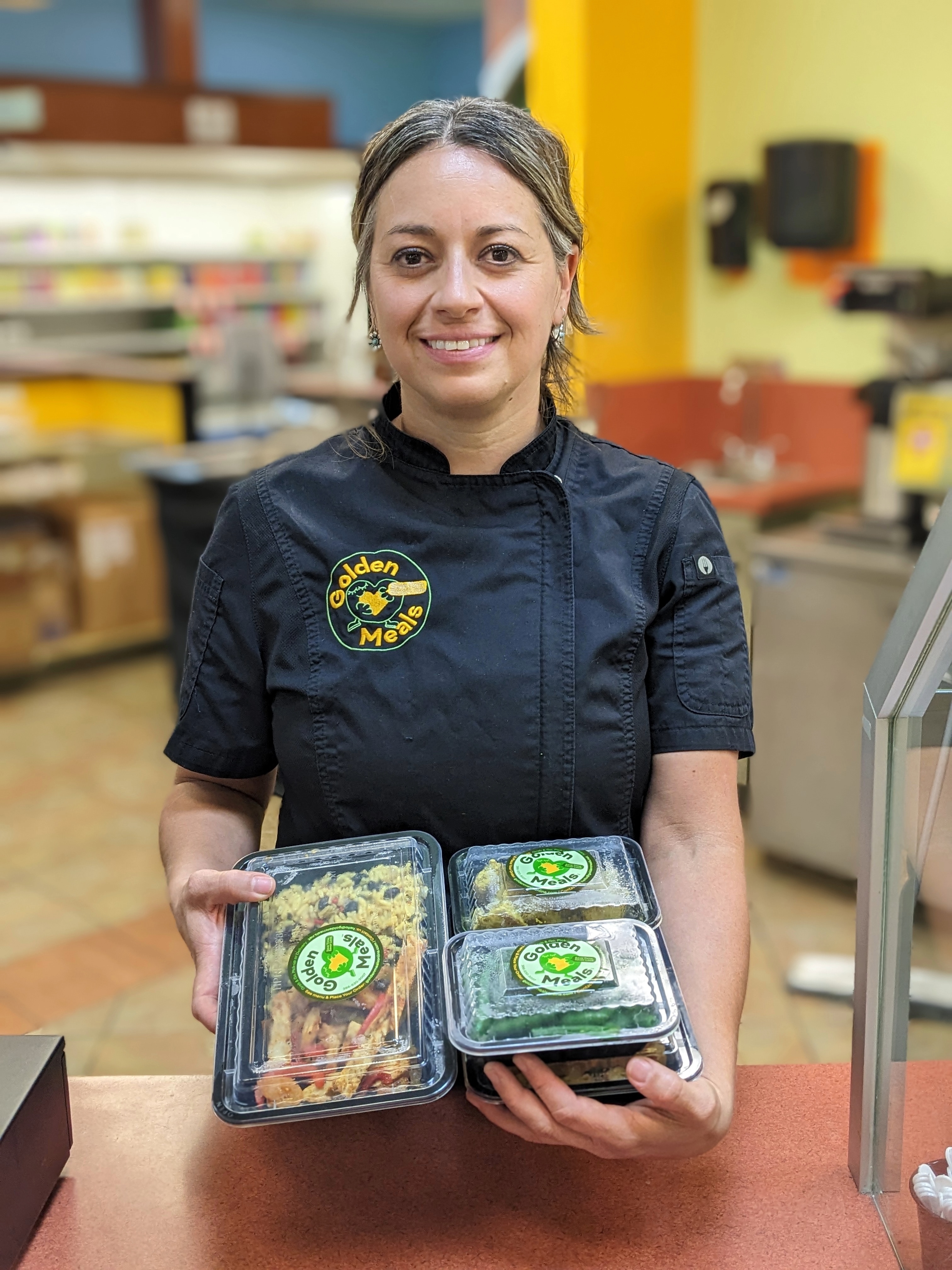
In the heart of downtown, amidst the vibrant pulse of local eateries and community events, there’s a name that keeps coming up: Chef Nora. If you’ve dined at De La Vega, you’ve likely experienced her artistry on a plate. But beyond the signature flavors and culinary finesse, there's a deeper, richer story — one of family, perseverance, and community love. And now, with her latest venture, Golden Meals, Chef Nora is cooking up something even more personal.
Chef Nora’s journey into the restaurant world began two decades ago when she and her family — her parents, brother, and sister — moved from New Mexico to Florida. They left behind everything familiar on the word of a family friend who saw promise in a vacant restaurant spot downtown.
With only a bit of restaurant experience between them, they leapt into entrepreneurship. “It wasn’t just a job,” Nora recalls. “I had already worked in restaurants. I realized what I really wanted was to have my own.” The family rallied around her dream — a move that not only shaped their livelihoods but also laid the groundwork for something bigger than any one of them could have imagined.
Their first venture was De La Vega — a name that not only carried their family heritage but symbolized their growing identity in the community. “We started with Tex-Mex,” Nora explained, “but quickly realized there were too many of those already. So we pivoted to something unique: Latin fusion with a tapas concept.”
It was a family effort from the start. Nora spearheaded the menu, crafting recipes with creativity and care, while her brother took on the general manager role. “It was our school,” she says. “Everything we’ve learned in the past 20 years, we learned by doing.”
Today, De La Vega is more than a restaurant — it’s a beloved local fixture. With loyal customers, an ever-evolving menu, and a consistent focus on flavor, it’s the kind of place that gets recommended again and again.
The concept for Golden Meals was born not in a commercial kitchen, but in Nora’s own home. “My dad was living in the senior apartments, and I used to make meals for him — healthy, ready to eat, so he didn’t have to cook.” After he passed away three years ago, Nora found herself talking to his neighbors — many of whom had similar needs. The idea began to take shape: a meal service designed to support seniors, promote wellness, and most importantly, taste amazing.
But what started as a personal project in memory of her father has grown into something with far wider impact.
While initially conceived as a service for seniors, Golden Meals quickly found a broader audience. “Everyone needs healthy food — busy moms, students, professionals,” Nora notes. “We realized this wasn’t just about one group. It’s for anyone who wants quick, affordable, and nutritious meals.”
When a deli inside a local natural market became available, the opportunity felt serendipitous. “Everything was ready — the kitchen, the space. We just had to bring the concept and the heart.”
Golden Meals officially opened its doors four months ago, operating weekdays from 11 a.m. to 3 p.m. It functions as both a grab-and-go cafe and a meal delivery service, offering flexible access for people with packed schedules or limited mobility. And yes — delivery is currently free.
Unlike De La Vega’s Latin fusion focus, Golden Meals is all about clean, fresh ingredients and variety. “We’re not tied to any one cuisine here. We can offer pasta, Asian dishes, vegan options — whatever inspires us and serves our community.”
Everything is made in-house, from scratch. Think: vibrant green beans sautéed with garlic and olive oil, sweet potatoes roasted to perfection, and macaroni salad that’s light but packed with flavor. Sodium and sugar are kept low; flavor is boosted with herbs and spices, not additives.
“We don’t want ‘healthy’ to mean boring,” Nora laughs. “You can eat well and still love every bite.”
Why the name Golden Meals? It’s a tribute to Nora’s father and the community he was part of. “It started with the idea of serving those in their golden years,” she says. “But now it means meals that are golden in quality, golden in purpose. Meals that make you feel good.”
Nora doesn’t shy away from talking about the hurdles. “The recession in 2008 hit us hard,” she remembers. “We had to get creative - package deals, specials, anything to bring people in.” Then came the hurricanes, five in their first year in Florida. And of course, COVID lockdown.
“That was one of the toughest. We had no staff. It was just me, my brother, my nephew, my niece. We were cooking, cleaning, delivering — everything. But we made it. That’s what matters.”
For other small business owners, she offers a simple but powerful reminder: “You just keep going. You pivot, you adapt, you lean on your family and your community. And you never lose sight of why you started.”
📍 Located inside the Natural Market
🕚 Open Monday–Friday, 11 AM to 3 PM
📱 Order online or through the Golden Meals app
🚚 Free delivery available for local orders
Whether you're a parent looking for healthier alternatives, a student in need of quick fuel, or a senior seeking convenient meals that actually taste good — Golden Meals has something on the menu for you.

As an MSB, you are probably aware that you have to file a suspicious activity report (SAR) if you detect any kind of facts that point to suspicious financial activity. This is a necessary requirement that can either create a layer of work that detracts from your focus of growth or can become an integral part of your business and fuel growth.
Similar to a Currency Transaction Report (CTR), a SAR reports the information of the customer in question but then gives as much information about the actual suspicious activity found by your team.
Depending on the activity, some customers can fly under the radar if your team isn’t trained to spot subtle actions that add up over time or point to some larger issue. Unlike a CTR, suspicious activity is not always as noticeable. Having a team that is defaulting to a mindset of watching for suspicious activity versus trying to catch things that have already happened is a good start to making this a priority.
Here is a good example of the not so obvious suspicious activity:
Frank Smith comes into your business and asks for 12 money orders in the amount of $1000.00 each. The cash Frank hands over consists of mostly large bills. When you ask him for additional information to complete your CTR he gets defensive and is wondering why you are asking him so many questions. He asks you how much money he can deposit without having to provide additional information. He gets irritated and decides to cancel the transaction and take all his cash back.
https://www.fincen.gov/resources/statutes-regulations/...
This is an example of structuring.
Structuring is the breaking up of transactions for the purpose of evading the Bank Secrecy Act reporting and record keeping requirements and, if appropriate thresholds are met, should be reported as a suspicious transaction under 31 C.F.R. § 103.18.
Why should you make your SAR a priority?
Besides the obvious negative results that will come at some point, making your SAR process a priority puts you in the driver’s seat in your business. You are choosing to stay on top of something that will inevitably blow up if not paid significant attention.
By making this a priority you are also choosing to say no to certain less than desirable customers who might actually be a good source of revenue. As an MSB, at times you can be incentivized to ignore some types of suspicious activity. The trade off between servicing and not reporting customers who bring you revenue or not servicing those customers, is a decision that will keep you in business for many years and allow you to sleep soundly at night. Just remember that one bad customer can put you out of business.
How to properly approach SAR filing:
Use compliance as your competitive advantage. We see MSBs go out of business all the time because they aren’t prioritizing the efforts that make up the fundamentals of their business.
Have a set process for how your team identifies and reports suspicious activity. Build this into your culture. Hiring people who want to help you run a business that’s above board and giving them a solid process, means you don’t have to manage them as closely and can still get the same result.
Reach out to our BSA team through our website at mysuretybank.com/msb for more information or connect with directly our CEO by email: rjames@surety.bank
Forget Growth for Growth’s Sake. Scale Your Company With Purpose!
Every business owner dreams of growth—the big contracts, the expanding team, the larger facility. Growth is exciting, but what happens when it outpaces your ability to sustain it? For small to mid-sized business owners, the challenge isn’t just getting bigger—it’s growing profitably. Scale too quickly, and you could find yourself losing control of your business. Scale too cautiously, and you risk stagnation. So, how do you strike the right balance?
The Growth Trap: A Cautionary Tale
Imagine you own a manufacturing company, and a massive order comes in. It’s a dream deal—10,000 units instead of the usual 1,000. You scramble to increase production, hiring new employees, ordering more materials, even taking on debt to finance the expansion. But a few months later, you realize you’re barely breaking even. The new employees aren’t fully trained yet, production costs have skyrocketed, and cash flow is tight. Your profit margins, which seemed healthy before, are now razor-thin. Worse, your suppliers have increased their prices due to the larger volume, but you didn’t adjust your pricing in time. You’re now operating at a loss, despite the influx of new business.
This scenario is all too common. Growth, if not managed wisely, can erode profits instead of increasing them. The key? Strategic scaling.
Profitability First, Expansion Second
In the early days, you might not be profitable, and that’s okay. Many businesses start in the red, investing in marketing, product development, and hiring. However, you must ensure you’re not losing money per product. If each unit costs $12 to make and you sell it for $10, no amount of scaling will save you—you’re just multiplying losses.
Similarly, new employees take time to become profitable. Hiring is an investment in growth, but it often takes months before an employee generates more revenue than they cost. Business owners must anticipate this ramp-up period and avoid over-hiring too soon.
Where to Focus Your Growth
Not all growth is created equal. The most efficient areas of expansion are those where costs scale more slowly than revenue. Prioritize these strategies:
Controlled Growth vs. Losing Control
Growth is exhilarating, but it must be controlled. Many business owners get so caught up in expansion that they give up too much equity, bringing in investors who eventually take control. Others overextend, running out of cash when things don’t go as planned.
Instead, keep growth sustainable:
Avoid Growth for Growth’s Sake
It’s easy to get caught up in vanity metrics—chasing higher sales, expanding into new markets, or acquiring more customers—without asking whether that growth actually benefits the business. But growth is not a goal in itself; it should be a means to an end. Every expansion initiative should answer a fundamental question: Will this make my business stronger in the long run? If the answer isn’t clear, it may be a sign to reassess.
Strategic growth means planning ahead. Before you leap, have a roadmap. Set clear, measurable goals, such as: “We aim to increase production by 50% over the next 18 months, which should yield a 20% revenue increase while maintaining a 15% profit margin.” This approach ensures that growth aligns with financial health, rather than just inflating top-line revenue while squeezing profits.
Smart business owners don’t just chase expansion; they balance growth with profitability. They scale strategically, ensuring each step forward is sustainable, and never lose sight of their core business strengths. With a steady hand, you can grow your company without losing control of it—and that’s the real measure of success.
Cash flow is the lifeblood of any business. Whether you're managing a commercial construction firm or running a retail operation, understanding how money moves in and out of your business is key to long-term success. Poor cash flow management can leave businesses scrambling to cover expenses, even when profits look good on paper.
A recent episode of the Expandable Series discussed this in detail, but here are some fundamental cash flow principles, using commercial construction as an example, that apply to businesses across all industries.
1. Understand Your Cash Outflows
In commercial construction, significant cash outlays are required upfront for raw materials, permits, and labor. These costs must be covered well before payments from clients arrive. Similarly, in retail, manufacturers need to purchase inventory long before customers make a purchase.
A business must have enough cash on hand to cover these expenses. Without it, operations may stall, delaying projects and impacting profitability. Understanding your cash needs ahead of time ensures smoother financial management.
Example: Imagine a mid-sized construction firm, Apex Builders, takes on a new commercial office project. Before the first payment arrives, they must pay for steel beams, concrete, and skilled labor. Without proper cash reserves or a well-structured payment schedule, Apex Builders could struggle to cover these costs, potentially halting the project and damaging their reputation.
2. Time Your Cash Inflows Strategically
Revenue in commercial construction typically comes from milestone payments throughout a project or upon completion. However, these payments can be delayed due to contract terms, client approvals, or unexpected issues.
For any business, it’s essential to analyze how long it takes to convert expenses into revenue. Are you waiting 30, 60, or even 90 days to get paid? If so, your business must be structured to withstand these gaps. Ensuring that your contract terms align with your cash flow needs can prevent unnecessary financial strain.
Example: Apex Builders structures their contracts to ensure payments are received at key milestones—such as after the foundation is laid, after framing is completed, and upon final inspection. By planning these payment intervals, they reduce financial stress and ensure they always have working capital.
3. Build a Cash Buffer
One of the best strategies for managing cash flow is to build a buffer that accounts for timing discrepancies. In construction, this means having enough reserves to cover payroll and material costs while waiting for payments. The same principle applies to any business with delayed payments.
This buffer should be built into your pricing. Instead of operating on razor-thin margins, factor in potential delays and unexpected costs when setting your rates. This ensures financial stability even during slower payment periods.
Example: Apex Builders includes a 10% contingency in their project bids, ensuring that if a client delays payment or unexpected costs arise, they have the liquidity to keep operations running smoothly.
4. Plan for Payroll and Fixed Expenses
Payroll is a non-negotiable expense in any business. Employees expect timely paychecks, and failure to meet payroll obligations can lead to operational disruptions and even legal consequences.
Since payroll and other fixed expenses (like rent, utilities, and insurance) don’t change based on revenue fluctuations, they must be accounted for in advance. Forecasting these expenses over the next quarter will help ensure you always have the necessary funds available.
Example: Apex Builders schedules payments from previous projects to help cover payroll during slow months, ensuring that employees are always paid on time.
5. Look Ahead to the Next Quarter
Successful businesses don’t just think about today’s cash flow—they plan for the next quarter and beyond. What projects are in the pipeline? When will revenue from those projects be realized? What expenses need to be covered in the meantime?
By forecasting cash flow and preparing for potential shortfalls, businesses can make informed decisions about when to invest, when to hold back, and when to seek additional financing options to bridge any gaps.
Example: Apex Builders maintain a rolling cash flow projection, helping them anticipate slow periods and ensuring they never take on more projects than they can financially support at one time.
The Bottom Line
Cash flow management isn’t just about tracking numbers—it’s about planning ahead, building flexibility into your pricing, and ensuring your business can withstand the natural ebbs and flows of financial cycles. Whether you’re in commercial construction, retail, or any other industry, mastering cash flow is essential for long-term success. Surety Bank is here to help businesses navigate these challenges with financial solutions designed to keep operations running smoothly.
As more banking moves online, security has become just as important as convenience. Whether you’re checking a personal account or managing company finances, your computer habits play a critical role in keeping your information safe. A few consistent practices can greatly reduce your risk of fraud and protect sensitive data.
Malware can capture keystrokes, steal login credentials, and access personal files without you realizing it. To stay protected:
Make full use of the security tools your devices and bank provide:
Closing your browser window isn’t enough to end your session.
Browsers can store sensitive information like login pages or cached credentials. To protect yourself:
Phishing emails and fraudulent pop-ups can trick you into giving away banking information. Watch for:
Best practice: Always access your bank by typing the official web address directly into your browser, never through email or ad links.
Businesses face higher risks, so proactive steps are essential:
Online banking can be safe and reliable when paired with good cybersecurity habits. By:
…you can protect both your finances and your peace of mind.
The key is consistency. Security isn’t a one-time task—it’s a set of habits built into your everyday banking routine. Taking these steps ensures your accounts remain secure, your sensitive information stays private, and you can manage your finances confidently, whether personally or for your business.
In the heart of downtown, amidst the vibrant pulse of local eateries and community events, there’s a name that keeps coming up: Chef Nora. If you’ve dined at De La Vega, you’ve likely experienced her artistry on a plate. But beyond the signature flavors and culinary finesse, there's a deeper, richer story — one of family, perseverance, and community love. And now, with her latest venture, Golden Meals, Chef Nora is cooking up something even more personal.
Chef Nora’s journey into the restaurant world began two decades ago when she and her family — her parents, brother, and sister — moved from New Mexico to Florida. They left behind everything familiar on the word of a family friend who saw promise in a vacant restaurant spot downtown.
With only a bit of restaurant experience between them, they leapt into entrepreneurship. “It wasn’t just a job,” Nora recalls. “I had already worked in restaurants. I realized what I really wanted was to have my own.” The family rallied around her dream — a move that not only shaped their livelihoods but also laid the groundwork for something bigger than any one of them could have imagined.
Their first venture was De La Vega — a name that not only carried their family heritage but symbolized their growing identity in the community. “We started with Tex-Mex,” Nora explained, “but quickly realized there were too many of those already. So we pivoted to something unique: Latin fusion with a tapas concept.”
It was a family effort from the start. Nora spearheaded the menu, crafting recipes with creativity and care, while her brother took on the general manager role. “It was our school,” she says. “Everything we’ve learned in the past 20 years, we learned by doing.”
Today, De La Vega is more than a restaurant — it’s a beloved local fixture. With loyal customers, an ever-evolving menu, and a consistent focus on flavor, it’s the kind of place that gets recommended again and again.
The concept for Golden Meals was born not in a commercial kitchen, but in Nora’s own home. “My dad was living in the senior apartments, and I used to make meals for him — healthy, ready to eat, so he didn’t have to cook.” After he passed away three years ago, Nora found herself talking to his neighbors — many of whom had similar needs. The idea began to take shape: a meal service designed to support seniors, promote wellness, and most importantly, taste amazing.
But what started as a personal project in memory of her father has grown into something with far wider impact.
While initially conceived as a service for seniors, Golden Meals quickly found a broader audience. “Everyone needs healthy food — busy moms, students, professionals,” Nora notes. “We realized this wasn’t just about one group. It’s for anyone who wants quick, affordable, and nutritious meals.”
When a deli inside a local natural market became available, the opportunity felt serendipitous. “Everything was ready — the kitchen, the space. We just had to bring the concept and the heart.”
Golden Meals officially opened its doors four months ago, operating weekdays from 11 a.m. to 3 p.m. It functions as both a grab-and-go cafe and a meal delivery service, offering flexible access for people with packed schedules or limited mobility. And yes — delivery is currently free.
Unlike De La Vega’s Latin fusion focus, Golden Meals is all about clean, fresh ingredients and variety. “We’re not tied to any one cuisine here. We can offer pasta, Asian dishes, vegan options — whatever inspires us and serves our community.”
Everything is made in-house, from scratch. Think: vibrant green beans sautéed with garlic and olive oil, sweet potatoes roasted to perfection, and macaroni salad that’s light but packed with flavor. Sodium and sugar are kept low; flavor is boosted with herbs and spices, not additives.
“We don’t want ‘healthy’ to mean boring,” Nora laughs. “You can eat well and still love every bite.”
Why the name Golden Meals? It’s a tribute to Nora’s father and the community he was part of. “It started with the idea of serving those in their golden years,” she says. “But now it means meals that are golden in quality, golden in purpose. Meals that make you feel good.”
Nora doesn’t shy away from talking about the hurdles. “The recession in 2008 hit us hard,” she remembers. “We had to get creative - package deals, specials, anything to bring people in.” Then came the hurricanes, five in their first year in Florida. And of course, COVID lockdown.
“That was one of the toughest. We had no staff. It was just me, my brother, my nephew, my niece. We were cooking, cleaning, delivering — everything. But we made it. That’s what matters.”
For other small business owners, she offers a simple but powerful reminder: “You just keep going. You pivot, you adapt, you lean on your family and your community. And you never lose sight of why you started.”
📍 Located inside the Natural Market
🕚 Open Monday–Friday, 11 AM to 3 PM
📱 Order online or through the Golden Meals app
🚚 Free delivery available for local orders
Whether you're a parent looking for healthier alternatives, a student in need of quick fuel, or a senior seeking convenient meals that actually taste good — Golden Meals has something on the menu for you.


Surety Bank continually works to provide greater accessibility to all of its products and services. If you have any questions about accessible banking, call us at 386-734-1647
© 2026 Surety Bank