


Other Resources
ALL ARTICLES


Community
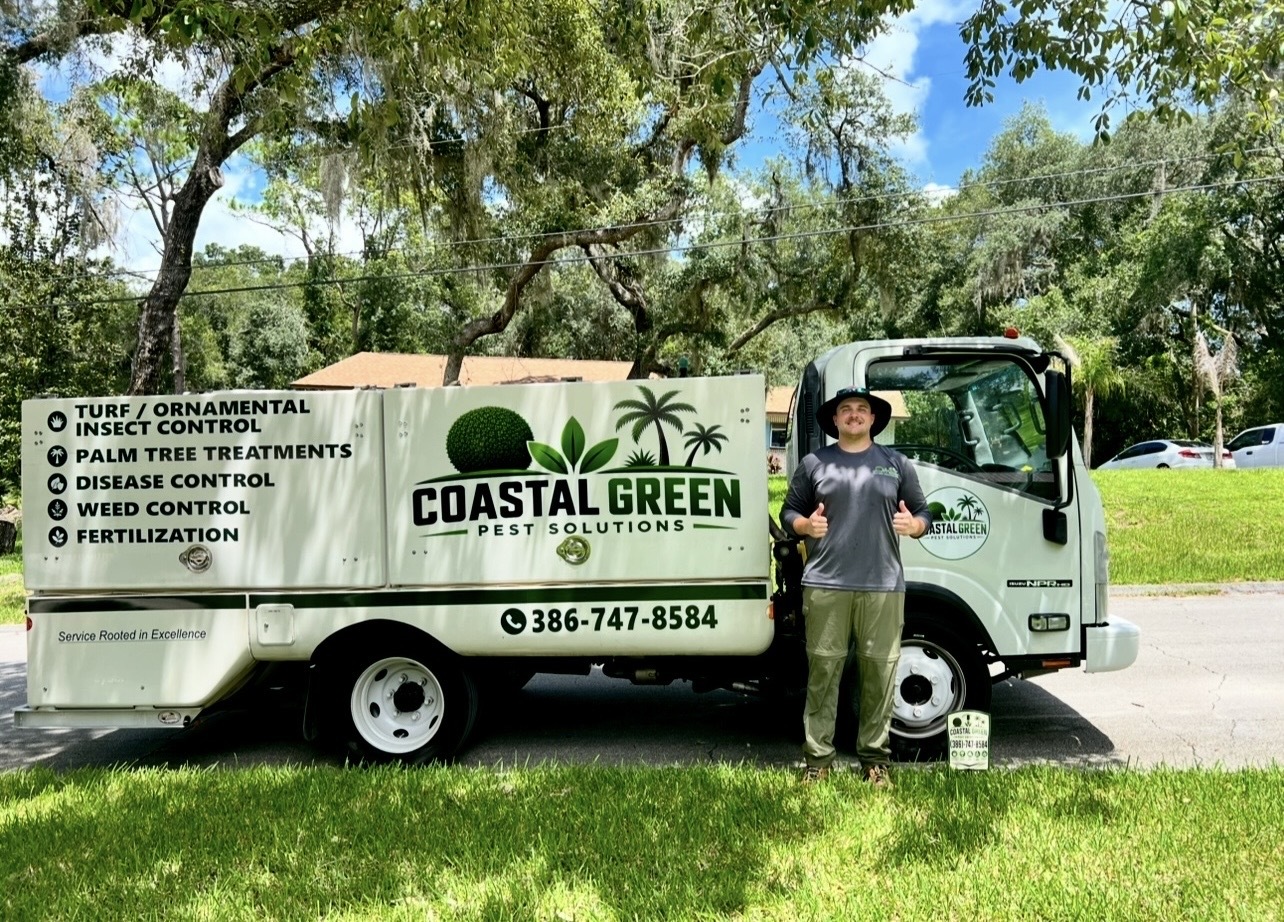
Growing Something of His Own: How DeLand’s Austin Scott Launched Coastal Green Pest Solutions
LEARN MORE
Personal Banking, Online Banking
Lorem ipsum dolor sit amet, consectetur adipiscing elit. Suspendisse varius enim in eros elementum tristique. Duis cursus, mi quis viverra ornare, eros dolor interdum nulla, ut commodo diam libero vitae erat. Aenean faucibus nibh et justo cursus id rutrum lorem imperdiet. Nunc ut sem vitae risus tristique posuere.
Stay informed with out regularly updated resources. Each post convers a unique aspect of banking or finance to enhance your understanding and enable better financial decisions.
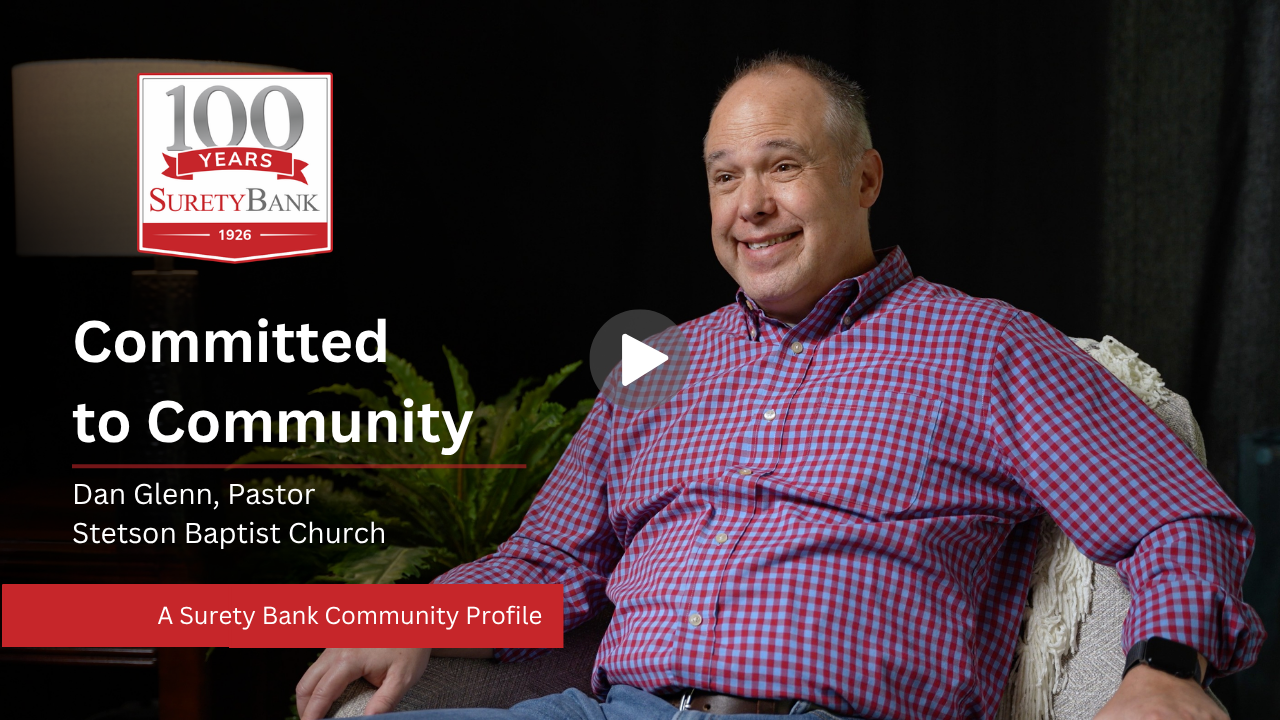
For Dan Glenn, Pastor of Stetson Baptist Church in DeLand, Surety Bank has become much more than the place where the church did its banking. Over the years, the initial banking relationship has grown into a partnership centered around a shared commitment to the community.
That partnership took on new meaning in 2018 when Stetson Baptist Church launched Night to Shine, an unforgettable prom experience for people with special needs held in partnership with the Tim Tebow Foundation.
Creating an experience like Night to Shine requires significant support, and Surety Bank was one of the event's earliest sponsors.
“Surety was one that came on very early saying, ‘Hey, we want to support that. We want to be a part of it.’”
For Dan, that moment marked a shift in the relationship. It became much more personal and community focused.
Surety continued supporting Night to Shine year after year, but one experience in particular showed Dan what that partnership truly meant.
After the first Night to Shine, Dan realized the church had never properly thanked Surety for its sponsorship. When it came time to plan the event again, he felt hesitant approaching Surety for another year of support.
The response surprised him.
There was no hesitation. Surety wanted to be involved again.
Years later, that commitment went even further when Surety reached out to the church without being asked and offered to increase its support.
“They have an intention to be generous, even when generosity may or may not be expected or requested.”
For Dan, that willingness to look for opportunities to make a greater impact is part of what distinguishes Surety Bank as a community organization.
Instead of simply waiting for someone to present a sponsorship request, Surety has been willing to ask a different question: How can we do more?
That philosophy extends beyond a single event.
Dan describes Surety not simply as a community bank, but as a “community-centered organization” that genuinely cares about DeLand and the relationships it has built throughout the city.
That personal connection is something Dan has experienced firsthand. His relationship with Surety isn't limited to the organization itself. It's also built through relationships with the people behind it.
As Surety Bank celebrates 100 years, Dan believes that commitment to people and community helps explain why the bank has remained part of DeLand for generations.
Over the past century, both the bank and the city have grown and changed. Yet Surety has continued to serve the community throughout that growth.
For Dan, that's exactly why Surety's 100th anniversary message, “How we've always done it is how we'll always do it,” resonates.
“The way they've always done things has been people centered, relationships centered, community centered.”
Those values create something that goes beyond banking. They create trust. They allow organizations like Stetson Baptist Church to know what to expect from a partner that has consistently shown up before and intends to continue showing up in the future.
After years of partnership, Dan hopes that part of Surety never changes.
This is how Surety Bank has always done it. It's how we will always do it.


For Austin Scott, starting a business wasn’t the result of a lifelong plan. It was something that grew over time, much like the lawns he now helps his customers care for.
Born and raised in DeLand, Austin is the owner of Coastal Green Pest Solutions, a new Volusia County business specializing in lawn treatments, pest management, fertilization, and the care of palms and shrubs.
The company may be new, but Austin is far from new to the work.
Before entering the lawn and pest control industry, Austin was selling auto parts at O’Reilly Auto Parts. Then a landscaper friend suggested he take a job with a local pest control company.
He gave it a shot and discovered an industry that fascinated him.
“I like that I could learn something new every day,” Austin says. “You get to see different problems, and you get to see the benefits of your own labor making a lawn beautiful. You get to see it go from nothing to something.”
Austin spent nearly six years in the industry, gradually developing an understanding of not only what products to use, but why lawns develop problems in the first place.
Interestingly, the work even gave him a new appreciation for a subject he once struggled with: chemistry.
In school, chemistry had never come naturally to Austin. But working with fertilizers, herbicides, insecticides, fungicides, and nutrients gave those concepts a real-world application.
“You get to learn something and then apply it directly,” he says.
And the more Austin learned, the more he realized there was an opportunity to do things differently.
Austin believes one of the biggest shortcomings in the lawn and pest control industry isn't necessarily the products or treatment programs companies use. It's the communication that happens, or doesn't happen, between the company, technician, and homeowner.
A lawn problem can be the result of insects, fungus, nutrient deficiencies, irrigation issues, environmental stress, or a combination of factors. Simply treating the symptom doesn't always solve the underlying problem.
Austin wants Coastal Green Pest Solutions to be different.
“I take pride in being the solution and the end to the revolving door when it comes to these lawn programs,” he says.
That means spending time with homeowners, explaining what is happening on their property, and helping them understand what needs to change.
Austin compares a lawn or landscape to the human body. One problem can affect the health of the entire system. Killing an insect, for example, may address the immediate issue, but it doesn't necessarily explain why the lawn became susceptible to the pest in the first place.
“If you can be the middleman between the problem, the chemicals, and the customer, and you can explain all that smoothly, that's normally the end,” Austin says. “A lot of people don't take the time to talk to their customers and make sure they understand.”
It's an approach built around education and relationships as much as treatment.
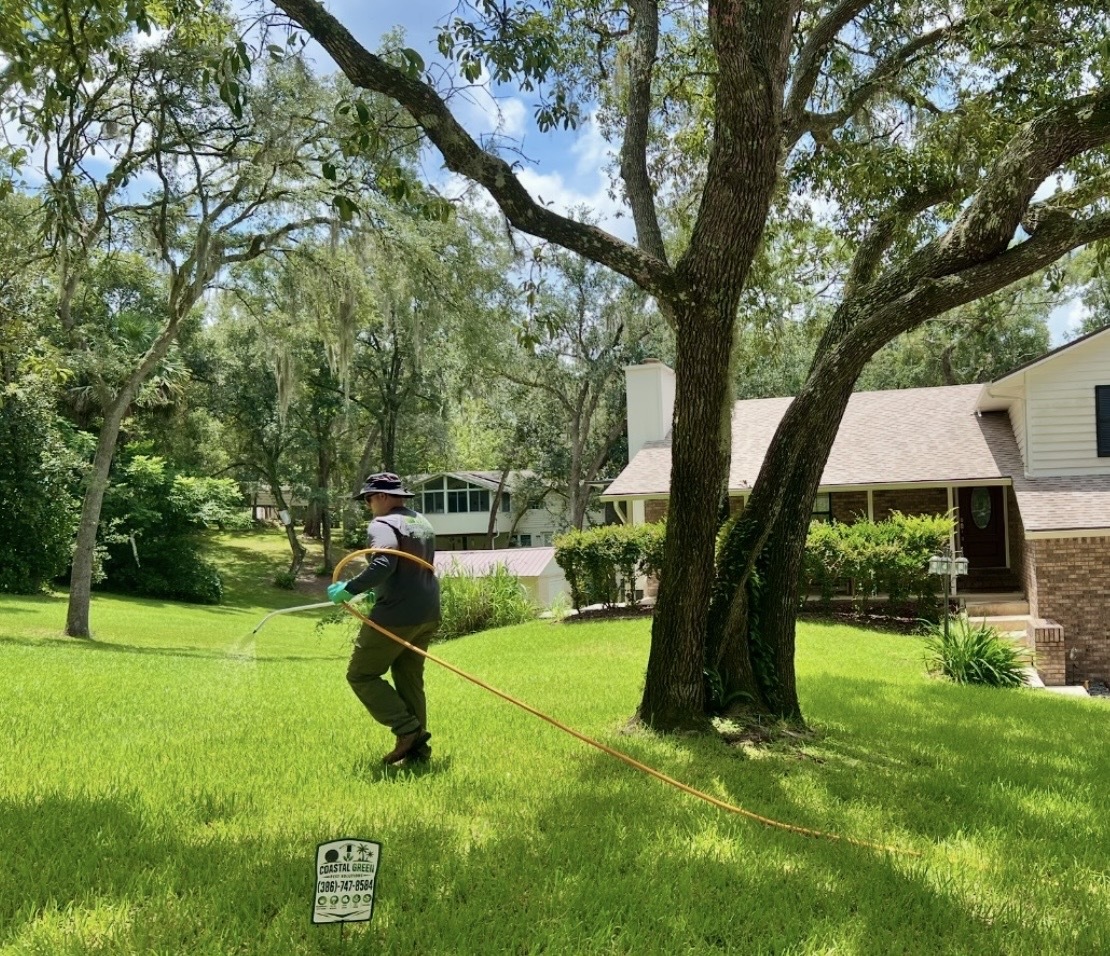
When the company Austin had worked for was sold, he saw an opportunity to take everything he'd learned and build something of his own.
Coastal Green Pest Solutions was born.
Today, Austin primarily works with residential customers throughout Volusia County who care about the long-term health and appearance of their properties.
His services include:
Austin's philosophy isn't about simply “spraying and praying,” as he puts it. Every property is different, so understanding what's actually happening comes before recommending a solution.
That philosophy also shapes how he plans to grow the business.
Starting a company requires more than expertise and ambition. There are trucks, equipment, products, operating expenses, and the reality that revenue doesn't necessarily arrive the moment the business opens its doors.
Austin knew he needed some financial breathing room as he got Coastal Green Pest Solutions off the ground.
That's where Surety Bank came in.
Austin first learned about Surety through his father, who had worked in real estate and developed a relationship with Surety Bank CEO Ryan James over the years.
When Austin was preparing to launch Coastal Green Pest Solutions, that local connection opened the door to a conversation.
“I was just looking for a good little loan—something to get me by, that way I had a little bit of breathing room,” Austin says. “I was very questionable on how I was going to make everything work, and honestly, I'm very grateful for Surety stepping in.”
Surety provided a business loan directly to Coastal Green Pest Solutions, giving Austin additional resources and flexibility during the critical early months of building the company.
For Austin, the experience demonstrated one of the advantages of working with a community bank: relationships matter.
Ryan knew Austin's family. He'd seen Austin working around town. And instead of Austin simply being another application, there was an opportunity to understand the person and business behind it.
That trust helped a local entrepreneur take the next step.
Just a couple of months into the business when we spoke with him, Austin already had big ambitions for Coastal Green Pest Solutions.
Eventually, he'd like to have multiple trucks on the road, a dedicated irrigation team, a sales team, and expanded services including home pest and termite control.
But he's in no hurry to grow simply for the sake of getting bigger.
Austin wants to make sure the service and customer experience that distinguish Coastal Green today remain intact as the company expands.
“If I'm not taking the time to personalize your service and making sure that I'm putting down what I'm promising, then there's no point in me opening up the next step,” he says.
He describes his philosophy simply as “natural growth or no growth.”
It's an especially fitting philosophy for someone who spends his days helping things grow.
For now, Austin is focused on building relationships, earning the trust of homeowners and landscapers throughout Volusia County, and developing Coastal Green one customer at a time.
And he's doing it in the community he has always called home.
“I still enjoy the small-town aspect of DeLand,” Austin says. “Raising a family here, having good friends here, it's very nice. DeLand's a good home base.”
As DeLand and Volusia County continue to grow, Austin hopes Coastal Green Pest Solutions will grow right alongside them, without losing the personal relationships that helped get the business started in the first place.
Coastal Green Pest Solutions serves homeowners throughout Volusia County. For homeowners who care about the health and appearance of their lawn and landscaping, Austin and Coastal Green provide personalized lawn treatment, pest management, fertilization, and plant health solutions.
Personal fraud continues to evolve, and scammers are finding increasingly sophisticated ways to target consumers. From AI-powered messages that appear surprisingly convincing to attempts to gain access to entire financial accounts. Recognizing the warning signs is becoming more important than ever.
While you can't prevent every fraud attempt, knowing what to watch for and taking a few proactive steps can make it much harder for scammers to succeed.
Artificial intelligence is making fraudulent calls and text messages feel more personal and legitimate. Scammers can use AI to create convincing communications designed to make you believe you're interacting with a trusted person or organization.
Be cautious when you receive an unexpected call or message asking for personal information, money, or access to an account. Before responding or taking action, reach out to Surety Bank directly to verify they are the ones calling. This step could mean not being scammed out of your money.
Fraudsters are increasingly looking beyond individual credit card numbers and attempting to gain access to entire financial profiles, including personal bank and investment accounts.
Protect your accounts by regularly reviewing activity for transactions you don't recognize and using multifactor authentication whenever it's available. Never provide your password, login credentials, or verification codes to someone who contacts you unexpectedly.
If you notice something unusual in your Surety Bank account, contact us promptly.
Older adults continue to be frequent targets of financial scams, particularly those involving tech support and investment-related schemes.
These scams often rely on urgency or fear to convince someone to act before they have an opportunity to question what's happening. Talk with older family members about common scams and encourage them to check with someone they trust before sending money or providing sensitive information in response to an unexpected request.
Taking a few minutes to verify a situation can help prevent a significant financial loss.
Protecting yourself doesn't require becoming a fraud expert. Start by being skeptical of unexpected requests for money or information, especially when someone pressures you to act immediately.
Use strong, unique passwords and enable multifactor authentication when available. Avoid clicking links in unexpected emails or text messages, and regularly review your bank accounts and credit reports for activity you don't recognize.
Most importantly, trust your instincts. If something doesn't feel right, stop and verify before taking action.
If you'd like to take additional steps to protect yourself, here are three resources worth exploring:
FTC IdentityTheft.gov
Best for someone who thinks their identity has already been compromised. The FTC provides a personalized recovery plan and steps for addressing identity theft.
Visit IdentityTheft.gov
FTC Credit Freeze & Fraud Alert Guide
Customers can place a free credit freeze, which can prevent identity thieves from opening new credit accounts in their name, or add a fraud alert.
Learn About Credit Freezes & Fraud Alerts
Aura
For those interested in a paid protection service, Aura offers identity and financial monitoring tools and other fraud-protection features. I’d position this as an optional third-party tool, not something Surety is recommending over other services.
Explore Aura
These resources are provided for informational purposes. Surety Bank does not endorse or guarantee any third-party product or service.
Fraud tactics will continue to change, but one of your strongest defenses is also one of the simplest: slow down.
Scammers often depend on creating urgency so you act before thinking. If you're unsure about a request involving your Surety Bank account, don't rely on the phone number, link, or contact information provided in the message. Contact Surety Bank directly through a trusted channel.
We're here to help you protect your financial information and recognize potential fraud before it becomes a loss.
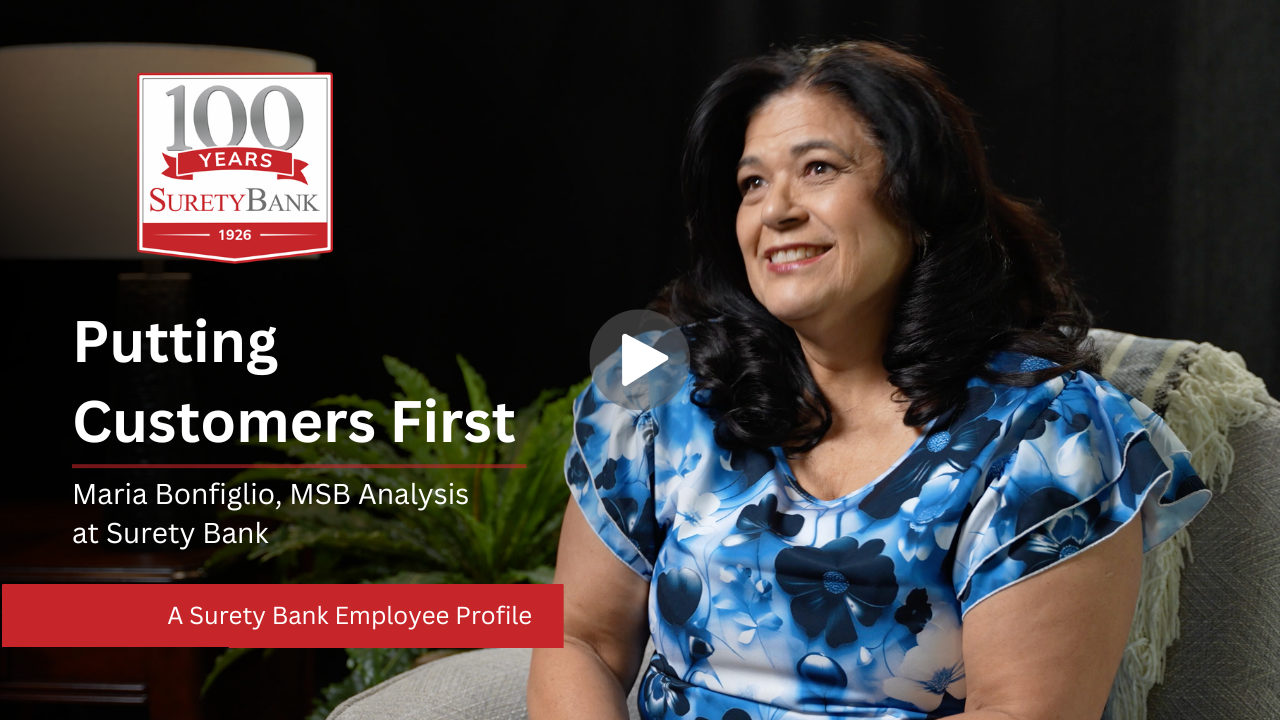
For Maria Bonfiglio, working at Surety Bank has always been about more than banking. It's about taking care of people.
Maria has been part of the Surety Bank family for nine years, but her journey began with a simple text message. A former boss she had stayed in touch with reached out years after they had worked together and told her, "I have the perfect job for you." Maria's response was simple: "Where should I sign?"
Nine years later, her enthusiasm hasn't changed.
"I love it. I love my job."
Over the years, Maria's role has evolved, giving her the opportunity to learn new skills and develop deeper relationships with customers. She has gotten to know some of them so well that she can recognize who is calling just by the sound of their voice. For Maria, those relationships are what make Surety feel less like a workplace and more like a family.
That personal connection also shapes the way Maria approaches protecting customers.
When something doesn't seem right, she isn't afraid to ask questions. Whether she's reviewing a check or helping someone resolve an issue with an account, Maria understands that taking a little extra time can make a significant difference.
"We really care about our customers," Maria explains. Even when customers may wonder why the bank is asking additional questions, she wants them to understand the reason behind it. "We don't want them to lose money."
For Maria, that care isn't limited to customers. She has experienced it personally as an employee.
During some of the most difficult moments of her life, including an extended hospital stay and the loss of her son, Maria remembers her Surety family checking on her, visiting her, and making sure she knew she wasn't alone. Those experiences showed her that the relationships Surety talks about aren't simply something customers experience. They're part of the culture inside the bank, too.
It's also why Maria believes Surety Bank has remained part of the community for 100 years. She has worked at other banks, but says Surety's involvement in the community feels different. The bank isn't trying to be the biggest. Instead, it has remained focused on the people and communities it serves.
That same philosophy comes through in Maria's relationships with her customers. Some have developed such a strong connection with her that when they call, they specifically ask for Maria. She takes pride in being someone they know they can turn to when they have a question or need assistance.
After nine years, Maria still says thank you for the opportunity that brought her to Surety Bank. Her story is a reminder that relationship banking begins with people who genuinely care about the people on the other side of the counter or phone.
This is how Surety Bank has always done it. It's how we will always do it.
.png)
For Lewis Long III, banking with Surety Bank is a relationship that has lasted more than five decades.
As one of Surety Bank's longest-standing customers, Lewis has watched the bank grow alongside the community since his connection to Surety began more than 50 years ago. He originally opened a savings account after hearing from neighbors that the bank consistently offered strong value and genuinely cared about its customers.
Over the years, Lewis has seen a lot of change. He remembers making deposits with a passbook while employees manually updated balances using a hand-cranked adding machine. What hasn't changed, however, is the way Surety Bank treats the people who walk through its doors.
For Lewis, that commitment extends beyond his own banking experience. When his sons were born, he opened accounts for each of them at Surety Bank, continuing a family tradition that has now spanned generations. One of his sons even participated in the ribbon-cutting ceremony when Surety Bank dedicated its current building in the early 1990s.
Throughout his life of military service, public service, and community involvement, Lewis has always returned to the same bank.
What has kept him loyal all these years?
The answer is simple: people.
"You couldn't ask for better service or better people," Lewis says. "I don't know how they remember everybody's name that walks in the door, but they do. They're just super folks. The people have always been a gift to us and to the community."
Lewis believes that the values Surety Bank was founded on continue to define the bank today. One story from the bank's early history has always stayed with him. During the Great Depression, he recalls hearing that Surety worked with customers rather than rushing to foreclose on them because they cared more about helping people than taking their property. That philosophy, he says, is still reflected in the way the bank serves its customers today.
It's one of the reasons Lewis has become an advocate for the bank wherever he goes.
Whether he's encouraging friends to open a money market account, sharing the bank's history, or even suggesting a new Surety branch for his hometown of Lake Helen, Lewis proudly recommends the bank he's trusted for more than half a century.
"I wouldn't champion the bank if I didn't believe in these folks and believe in this bank," he says. "Everybody is important. They see past whatever's bothering someone that day and still treat people with kindness and respect."
As Surety Bank celebrates 100 years of serving Central Florida, customers like Lewis remind us that while banking has evolved, some things should never change. Genuine relationships, exceptional service, and a commitment to the community remain at the heart of everything we do.
This is how Surety Bank has always done it. It's how we will always do it.
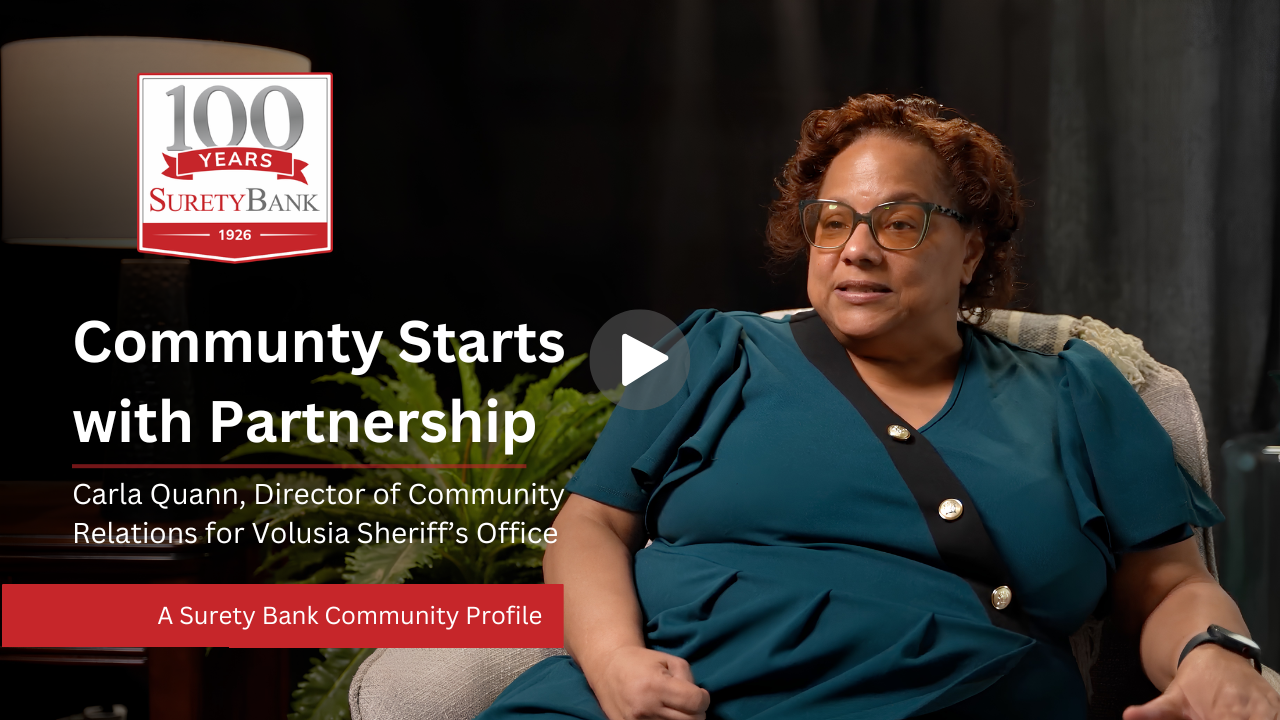
For 100 years, Surety Bank has believed that community banking means more than serving customers inside the walls of a branch. It means investing in the people, organizations, and partnerships that help our communities thrive.
That commitment is something Carla Quann, Director of Community Relations for the Volusia Sheriff's Office, has experienced firsthand.
"Our goal is to support everyone in our community," Carla explains. "Ryan [James] wanted to be a part of what we're doing because he cares about the community."
The partnership between Surety Bank and the Volusia Sheriff's Office began when Surety Bank President & CEO Ryan James joined the Volusia Sheriff's Foundation Board. Since then, the relationship has grown into a collaborative effort focused on addressing some of the community's greatest needs.
One example came during the holiday season, when thousands of local families faced uncertainty after SNAP benefits were unexpectedly interrupted. Through the combined efforts of businesses, volunteers, and community organizations, more than 3,500 grocery bags were distributed to families throughout Volusia County.
According to Carla, Surety Bank was an important part of making that effort possible.
Beyond community events and charitable initiatives, the partnership has also helped strengthen public safety.
As financial scams targeting older adults became increasingly common, Surety Bank worked alongside the Sheriff's Office to provide education, share industry expertise, and help detectives better recognize the warning signs of fraud.
That collaboration ultimately helped lead to the creation of the Volusia Sheriff's Office Financial Crimes Unit—a dedicated team focused on protecting residents from fraud and financial exploitation.
Working together, those efforts have helped recover more than $2 million for local victims of financial crimes.
For Carla, those results reflect what makes Surety Bank different.
"They're not just another hometown bank," she says. "They care about their community."
She believes that commitment starts with customer service but extends far beyond banking. Whether supporting nonprofit organizations, helping law enforcement address emerging scams, or simply answering the phone when someone needs help, Surety Bank has built relationships rooted in trust.
"People trust them," Carla says. "They've built that trust with their customers, and that's why people stay."
As Surety Bank celebrates a century of serving Central Florida, partnerships like this demonstrate that community banking isn't defined only by financial services—it's measured by the impact a bank has on the people and communities it serves.
For 100 years, Surety Bank has believed that when communities succeed, everyone succeeds. Through partnerships built on trust, service, and shared purpose, that commitment continues today—and will continue for generations to come.
For Dan Glenn, Pastor of Stetson Baptist Church in DeLand, Surety Bank has become much more than the place where the church did its banking. Over the years, the initial banking relationship has grown into a partnership centered around a shared commitment to the community.
That partnership took on new meaning in 2018 when Stetson Baptist Church launched Night to Shine, an unforgettable prom experience for people with special needs held in partnership with the Tim Tebow Foundation.
Creating an experience like Night to Shine requires significant support, and Surety Bank was one of the event's earliest sponsors.
“Surety was one that came on very early saying, ‘Hey, we want to support that. We want to be a part of it.’”
For Dan, that moment marked a shift in the relationship. It became much more personal and community focused.
Surety continued supporting Night to Shine year after year, but one experience in particular showed Dan what that partnership truly meant.
After the first Night to Shine, Dan realized the church had never properly thanked Surety for its sponsorship. When it came time to plan the event again, he felt hesitant approaching Surety for another year of support.
The response surprised him.
There was no hesitation. Surety wanted to be involved again.
Years later, that commitment went even further when Surety reached out to the church without being asked and offered to increase its support.
“They have an intention to be generous, even when generosity may or may not be expected or requested.”
For Dan, that willingness to look for opportunities to make a greater impact is part of what distinguishes Surety Bank as a community organization.
Instead of simply waiting for someone to present a sponsorship request, Surety has been willing to ask a different question: How can we do more?
That philosophy extends beyond a single event.
Dan describes Surety not simply as a community bank, but as a “community-centered organization” that genuinely cares about DeLand and the relationships it has built throughout the city.
That personal connection is something Dan has experienced firsthand. His relationship with Surety isn't limited to the organization itself. It's also built through relationships with the people behind it.
As Surety Bank celebrates 100 years, Dan believes that commitment to people and community helps explain why the bank has remained part of DeLand for generations.
Over the past century, both the bank and the city have grown and changed. Yet Surety has continued to serve the community throughout that growth.
For Dan, that's exactly why Surety's 100th anniversary message, “How we've always done it is how we'll always do it,” resonates.
“The way they've always done things has been people centered, relationships centered, community centered.”
Those values create something that goes beyond banking. They create trust. They allow organizations like Stetson Baptist Church to know what to expect from a partner that has consistently shown up before and intends to continue showing up in the future.
After years of partnership, Dan hopes that part of Surety never changes.
This is how Surety Bank has always done it. It's how we will always do it.
For Austin Scott, starting a business wasn’t the result of a lifelong plan. It was something that grew over time, much like the lawns he now helps his customers care for.
Born and raised in DeLand, Austin is the owner of Coastal Green Pest Solutions, a new Volusia County business specializing in lawn treatments, pest management, fertilization, and the care of palms and shrubs.
The company may be new, but Austin is far from new to the work.
Before entering the lawn and pest control industry, Austin was selling auto parts at O’Reilly Auto Parts. Then a landscaper friend suggested he take a job with a local pest control company.
He gave it a shot and discovered an industry that fascinated him.
“I like that I could learn something new every day,” Austin says. “You get to see different problems, and you get to see the benefits of your own labor making a lawn beautiful. You get to see it go from nothing to something.”
Austin spent nearly six years in the industry, gradually developing an understanding of not only what products to use, but why lawns develop problems in the first place.
Interestingly, the work even gave him a new appreciation for a subject he once struggled with: chemistry.
In school, chemistry had never come naturally to Austin. But working with fertilizers, herbicides, insecticides, fungicides, and nutrients gave those concepts a real-world application.
“You get to learn something and then apply it directly,” he says.
And the more Austin learned, the more he realized there was an opportunity to do things differently.
Austin believes one of the biggest shortcomings in the lawn and pest control industry isn't necessarily the products or treatment programs companies use. It's the communication that happens, or doesn't happen, between the company, technician, and homeowner.
A lawn problem can be the result of insects, fungus, nutrient deficiencies, irrigation issues, environmental stress, or a combination of factors. Simply treating the symptom doesn't always solve the underlying problem.
Austin wants Coastal Green Pest Solutions to be different.
“I take pride in being the solution and the end to the revolving door when it comes to these lawn programs,” he says.
That means spending time with homeowners, explaining what is happening on their property, and helping them understand what needs to change.
Austin compares a lawn or landscape to the human body. One problem can affect the health of the entire system. Killing an insect, for example, may address the immediate issue, but it doesn't necessarily explain why the lawn became susceptible to the pest in the first place.
“If you can be the middleman between the problem, the chemicals, and the customer, and you can explain all that smoothly, that's normally the end,” Austin says. “A lot of people don't take the time to talk to their customers and make sure they understand.”
It's an approach built around education and relationships as much as treatment.
When the company Austin had worked for was sold, he saw an opportunity to take everything he'd learned and build something of his own.
Coastal Green Pest Solutions was born.
Today, Austin primarily works with residential customers throughout Volusia County who care about the long-term health and appearance of their properties.
His services include:
Austin's philosophy isn't about simply “spraying and praying,” as he puts it. Every property is different, so understanding what's actually happening comes before recommending a solution.
That philosophy also shapes how he plans to grow the business.
Starting a company requires more than expertise and ambition. There are trucks, equipment, products, operating expenses, and the reality that revenue doesn't necessarily arrive the moment the business opens its doors.
Austin knew he needed some financial breathing room as he got Coastal Green Pest Solutions off the ground.
That's where Surety Bank came in.
Austin first learned about Surety through his father, who had worked in real estate and developed a relationship with Surety Bank CEO Ryan James over the years.
When Austin was preparing to launch Coastal Green Pest Solutions, that local connection opened the door to a conversation.
“I was just looking for a good little loan—something to get me by, that way I had a little bit of breathing room,” Austin says. “I was very questionable on how I was going to make everything work, and honestly, I'm very grateful for Surety stepping in.”
Surety provided a business loan directly to Coastal Green Pest Solutions, giving Austin additional resources and flexibility during the critical early months of building the company.
For Austin, the experience demonstrated one of the advantages of working with a community bank: relationships matter.
Ryan knew Austin's family. He'd seen Austin working around town. And instead of Austin simply being another application, there was an opportunity to understand the person and business behind it.
That trust helped a local entrepreneur take the next step.
Just a couple of months into the business when we spoke with him, Austin already had big ambitions for Coastal Green Pest Solutions.
Eventually, he'd like to have multiple trucks on the road, a dedicated irrigation team, a sales team, and expanded services including home pest and termite control.
But he's in no hurry to grow simply for the sake of getting bigger.
Austin wants to make sure the service and customer experience that distinguish Coastal Green today remain intact as the company expands.
“If I'm not taking the time to personalize your service and making sure that I'm putting down what I'm promising, then there's no point in me opening up the next step,” he says.
He describes his philosophy simply as “natural growth or no growth.”
It's an especially fitting philosophy for someone who spends his days helping things grow.
For now, Austin is focused on building relationships, earning the trust of homeowners and landscapers throughout Volusia County, and developing Coastal Green one customer at a time.
And he's doing it in the community he has always called home.
“I still enjoy the small-town aspect of DeLand,” Austin says. “Raising a family here, having good friends here, it's very nice. DeLand's a good home base.”
As DeLand and Volusia County continue to grow, Austin hopes Coastal Green Pest Solutions will grow right alongside them, without losing the personal relationships that helped get the business started in the first place.
Coastal Green Pest Solutions serves homeowners throughout Volusia County. For homeowners who care about the health and appearance of their lawn and landscaping, Austin and Coastal Green provide personalized lawn treatment, pest management, fertilization, and plant health solutions.
Personal fraud continues to evolve, and scammers are finding increasingly sophisticated ways to target consumers. From AI-powered messages that appear surprisingly convincing to attempts to gain access to entire financial accounts. Recognizing the warning signs is becoming more important than ever.
While you can't prevent every fraud attempt, knowing what to watch for and taking a few proactive steps can make it much harder for scammers to succeed.
Artificial intelligence is making fraudulent calls and text messages feel more personal and legitimate. Scammers can use AI to create convincing communications designed to make you believe you're interacting with a trusted person or organization.
Be cautious when you receive an unexpected call or message asking for personal information, money, or access to an account. Before responding or taking action, reach out to Surety Bank directly to verify they are the ones calling. This step could mean not being scammed out of your money.
Fraudsters are increasingly looking beyond individual credit card numbers and attempting to gain access to entire financial profiles, including personal bank and investment accounts.
Protect your accounts by regularly reviewing activity for transactions you don't recognize and using multifactor authentication whenever it's available. Never provide your password, login credentials, or verification codes to someone who contacts you unexpectedly.
If you notice something unusual in your Surety Bank account, contact us promptly.
Older adults continue to be frequent targets of financial scams, particularly those involving tech support and investment-related schemes.
These scams often rely on urgency or fear to convince someone to act before they have an opportunity to question what's happening. Talk with older family members about common scams and encourage them to check with someone they trust before sending money or providing sensitive information in response to an unexpected request.
Taking a few minutes to verify a situation can help prevent a significant financial loss.
Protecting yourself doesn't require becoming a fraud expert. Start by being skeptical of unexpected requests for money or information, especially when someone pressures you to act immediately.
Use strong, unique passwords and enable multifactor authentication when available. Avoid clicking links in unexpected emails or text messages, and regularly review your bank accounts and credit reports for activity you don't recognize.
Most importantly, trust your instincts. If something doesn't feel right, stop and verify before taking action.
If you'd like to take additional steps to protect yourself, here are three resources worth exploring:
FTC IdentityTheft.gov
Best for someone who thinks their identity has already been compromised. The FTC provides a personalized recovery plan and steps for addressing identity theft.
Visit IdentityTheft.gov
FTC Credit Freeze & Fraud Alert Guide
Customers can place a free credit freeze, which can prevent identity thieves from opening new credit accounts in their name, or add a fraud alert.
Learn About Credit Freezes & Fraud Alerts
Aura
For those interested in a paid protection service, Aura offers identity and financial monitoring tools and other fraud-protection features. I’d position this as an optional third-party tool, not something Surety is recommending over other services.
Explore Aura
These resources are provided for informational purposes. Surety Bank does not endorse or guarantee any third-party product or service.
Fraud tactics will continue to change, but one of your strongest defenses is also one of the simplest: slow down.
Scammers often depend on creating urgency so you act before thinking. If you're unsure about a request involving your Surety Bank account, don't rely on the phone number, link, or contact information provided in the message. Contact Surety Bank directly through a trusted channel.
We're here to help you protect your financial information and recognize potential fraud before it becomes a loss.
For Maria Bonfiglio, working at Surety Bank has always been about more than banking. It's about taking care of people.
Maria has been part of the Surety Bank family for nine years, but her journey began with a simple text message. A former boss she had stayed in touch with reached out years after they had worked together and told her, "I have the perfect job for you." Maria's response was simple: "Where should I sign?"
Nine years later, her enthusiasm hasn't changed.
"I love it. I love my job."
Over the years, Maria's role has evolved, giving her the opportunity to learn new skills and develop deeper relationships with customers. She has gotten to know some of them so well that she can recognize who is calling just by the sound of their voice. For Maria, those relationships are what make Surety feel less like a workplace and more like a family.
That personal connection also shapes the way Maria approaches protecting customers.
When something doesn't seem right, she isn't afraid to ask questions. Whether she's reviewing a check or helping someone resolve an issue with an account, Maria understands that taking a little extra time can make a significant difference.
"We really care about our customers," Maria explains. Even when customers may wonder why the bank is asking additional questions, she wants them to understand the reason behind it. "We don't want them to lose money."
For Maria, that care isn't limited to customers. She has experienced it personally as an employee.
During some of the most difficult moments of her life, including an extended hospital stay and the loss of her son, Maria remembers her Surety family checking on her, visiting her, and making sure she knew she wasn't alone. Those experiences showed her that the relationships Surety talks about aren't simply something customers experience. They're part of the culture inside the bank, too.
It's also why Maria believes Surety Bank has remained part of the community for 100 years. She has worked at other banks, but says Surety's involvement in the community feels different. The bank isn't trying to be the biggest. Instead, it has remained focused on the people and communities it serves.
That same philosophy comes through in Maria's relationships with her customers. Some have developed such a strong connection with her that when they call, they specifically ask for Maria. She takes pride in being someone they know they can turn to when they have a question or need assistance.
After nine years, Maria still says thank you for the opportunity that brought her to Surety Bank. Her story is a reminder that relationship banking begins with people who genuinely care about the people on the other side of the counter or phone.
This is how Surety Bank has always done it. It's how we will always do it.
For Lewis Long III, banking with Surety Bank is a relationship that has lasted more than five decades.
As one of Surety Bank's longest-standing customers, Lewis has watched the bank grow alongside the community since his connection to Surety began more than 50 years ago. He originally opened a savings account after hearing from neighbors that the bank consistently offered strong value and genuinely cared about its customers.
Over the years, Lewis has seen a lot of change. He remembers making deposits with a passbook while employees manually updated balances using a hand-cranked adding machine. What hasn't changed, however, is the way Surety Bank treats the people who walk through its doors.
For Lewis, that commitment extends beyond his own banking experience. When his sons were born, he opened accounts for each of them at Surety Bank, continuing a family tradition that has now spanned generations. One of his sons even participated in the ribbon-cutting ceremony when Surety Bank dedicated its current building in the early 1990s.
Throughout his life of military service, public service, and community involvement, Lewis has always returned to the same bank.
What has kept him loyal all these years?
The answer is simple: people.
"You couldn't ask for better service or better people," Lewis says. "I don't know how they remember everybody's name that walks in the door, but they do. They're just super folks. The people have always been a gift to us and to the community."
Lewis believes that the values Surety Bank was founded on continue to define the bank today. One story from the bank's early history has always stayed with him. During the Great Depression, he recalls hearing that Surety worked with customers rather than rushing to foreclose on them because they cared more about helping people than taking their property. That philosophy, he says, is still reflected in the way the bank serves its customers today.
It's one of the reasons Lewis has become an advocate for the bank wherever he goes.
Whether he's encouraging friends to open a money market account, sharing the bank's history, or even suggesting a new Surety branch for his hometown of Lake Helen, Lewis proudly recommends the bank he's trusted for more than half a century.
"I wouldn't champion the bank if I didn't believe in these folks and believe in this bank," he says. "Everybody is important. They see past whatever's bothering someone that day and still treat people with kindness and respect."
As Surety Bank celebrates 100 years of serving Central Florida, customers like Lewis remind us that while banking has evolved, some things should never change. Genuine relationships, exceptional service, and a commitment to the community remain at the heart of everything we do.
This is how Surety Bank has always done it. It's how we will always do it.
For 100 years, Surety Bank has believed that community banking means more than serving customers inside the walls of a branch. It means investing in the people, organizations, and partnerships that help our communities thrive.
That commitment is something Carla Quann, Director of Community Relations for the Volusia Sheriff's Office, has experienced firsthand.
"Our goal is to support everyone in our community," Carla explains. "Ryan [James] wanted to be a part of what we're doing because he cares about the community."
The partnership between Surety Bank and the Volusia Sheriff's Office began when Surety Bank President & CEO Ryan James joined the Volusia Sheriff's Foundation Board. Since then, the relationship has grown into a collaborative effort focused on addressing some of the community's greatest needs.
One example came during the holiday season, when thousands of local families faced uncertainty after SNAP benefits were unexpectedly interrupted. Through the combined efforts of businesses, volunteers, and community organizations, more than 3,500 grocery bags were distributed to families throughout Volusia County.
According to Carla, Surety Bank was an important part of making that effort possible.
Beyond community events and charitable initiatives, the partnership has also helped strengthen public safety.
As financial scams targeting older adults became increasingly common, Surety Bank worked alongside the Sheriff's Office to provide education, share industry expertise, and help detectives better recognize the warning signs of fraud.
That collaboration ultimately helped lead to the creation of the Volusia Sheriff's Office Financial Crimes Unit—a dedicated team focused on protecting residents from fraud and financial exploitation.
Working together, those efforts have helped recover more than $2 million for local victims of financial crimes.
For Carla, those results reflect what makes Surety Bank different.
"They're not just another hometown bank," she says. "They care about their community."
She believes that commitment starts with customer service but extends far beyond banking. Whether supporting nonprofit organizations, helping law enforcement address emerging scams, or simply answering the phone when someone needs help, Surety Bank has built relationships rooted in trust.
"People trust them," Carla says. "They've built that trust with their customers, and that's why people stay."
As Surety Bank celebrates a century of serving Central Florida, partnerships like this demonstrate that community banking isn't defined only by financial services—it's measured by the impact a bank has on the people and communities it serves.
For 100 years, Surety Bank has believed that when communities succeed, everyone succeeds. Through partnerships built on trust, service, and shared purpose, that commitment continues today—and will continue for generations to come.
For Dan Glenn, Pastor of Stetson Baptist Church in DeLand, Surety Bank has become much more than the place where the church did its banking. Over the years, the initial banking relationship has grown into a partnership centered around a shared commitment to the community.
That partnership took on new meaning in 2018 when Stetson Baptist Church launched Night to Shine, an unforgettable prom experience for people with special needs held in partnership with the Tim Tebow Foundation.
Creating an experience like Night to Shine requires significant support, and Surety Bank was one of the event's earliest sponsors.
“Surety was one that came on very early saying, ‘Hey, we want to support that. We want to be a part of it.’”
For Dan, that moment marked a shift in the relationship. It became much more personal and community focused.
Surety continued supporting Night to Shine year after year, but one experience in particular showed Dan what that partnership truly meant.
After the first Night to Shine, Dan realized the church had never properly thanked Surety for its sponsorship. When it came time to plan the event again, he felt hesitant approaching Surety for another year of support.
The response surprised him.
There was no hesitation. Surety wanted to be involved again.
Years later, that commitment went even further when Surety reached out to the church without being asked and offered to increase its support.
“They have an intention to be generous, even when generosity may or may not be expected or requested.”
For Dan, that willingness to look for opportunities to make a greater impact is part of what distinguishes Surety Bank as a community organization.
Instead of simply waiting for someone to present a sponsorship request, Surety has been willing to ask a different question: How can we do more?
That philosophy extends beyond a single event.
Dan describes Surety not simply as a community bank, but as a “community-centered organization” that genuinely cares about DeLand and the relationships it has built throughout the city.
That personal connection is something Dan has experienced firsthand. His relationship with Surety isn't limited to the organization itself. It's also built through relationships with the people behind it.
As Surety Bank celebrates 100 years, Dan believes that commitment to people and community helps explain why the bank has remained part of DeLand for generations.
Over the past century, both the bank and the city have grown and changed. Yet Surety has continued to serve the community throughout that growth.
For Dan, that's exactly why Surety's 100th anniversary message, “How we've always done it is how we'll always do it,” resonates.
“The way they've always done things has been people centered, relationships centered, community centered.”
Those values create something that goes beyond banking. They create trust. They allow organizations like Stetson Baptist Church to know what to expect from a partner that has consistently shown up before and intends to continue showing up in the future.
After years of partnership, Dan hopes that part of Surety never changes.
This is how Surety Bank has always done it. It's how we will always do it.
For Austin Scott, starting a business wasn’t the result of a lifelong plan. It was something that grew over time, much like the lawns he now helps his customers care for.
Born and raised in DeLand, Austin is the owner of Coastal Green Pest Solutions, a new Volusia County business specializing in lawn treatments, pest management, fertilization, and the care of palms and shrubs.
The company may be new, but Austin is far from new to the work.
Before entering the lawn and pest control industry, Austin was selling auto parts at O’Reilly Auto Parts. Then a landscaper friend suggested he take a job with a local pest control company.
He gave it a shot and discovered an industry that fascinated him.
“I like that I could learn something new every day,” Austin says. “You get to see different problems, and you get to see the benefits of your own labor making a lawn beautiful. You get to see it go from nothing to something.”
Austin spent nearly six years in the industry, gradually developing an understanding of not only what products to use, but why lawns develop problems in the first place.
Interestingly, the work even gave him a new appreciation for a subject he once struggled with: chemistry.
In school, chemistry had never come naturally to Austin. But working with fertilizers, herbicides, insecticides, fungicides, and nutrients gave those concepts a real-world application.
“You get to learn something and then apply it directly,” he says.
And the more Austin learned, the more he realized there was an opportunity to do things differently.
Austin believes one of the biggest shortcomings in the lawn and pest control industry isn't necessarily the products or treatment programs companies use. It's the communication that happens, or doesn't happen, between the company, technician, and homeowner.
A lawn problem can be the result of insects, fungus, nutrient deficiencies, irrigation issues, environmental stress, or a combination of factors. Simply treating the symptom doesn't always solve the underlying problem.
Austin wants Coastal Green Pest Solutions to be different.
“I take pride in being the solution and the end to the revolving door when it comes to these lawn programs,” he says.
That means spending time with homeowners, explaining what is happening on their property, and helping them understand what needs to change.
Austin compares a lawn or landscape to the human body. One problem can affect the health of the entire system. Killing an insect, for example, may address the immediate issue, but it doesn't necessarily explain why the lawn became susceptible to the pest in the first place.
“If you can be the middleman between the problem, the chemicals, and the customer, and you can explain all that smoothly, that's normally the end,” Austin says. “A lot of people don't take the time to talk to their customers and make sure they understand.”
It's an approach built around education and relationships as much as treatment.
When the company Austin had worked for was sold, he saw an opportunity to take everything he'd learned and build something of his own.
Coastal Green Pest Solutions was born.
Today, Austin primarily works with residential customers throughout Volusia County who care about the long-term health and appearance of their properties.
His services include:
Austin's philosophy isn't about simply “spraying and praying,” as he puts it. Every property is different, so understanding what's actually happening comes before recommending a solution.
That philosophy also shapes how he plans to grow the business.
Starting a company requires more than expertise and ambition. There are trucks, equipment, products, operating expenses, and the reality that revenue doesn't necessarily arrive the moment the business opens its doors.
Austin knew he needed some financial breathing room as he got Coastal Green Pest Solutions off the ground.
That's where Surety Bank came in.
Austin first learned about Surety through his father, who had worked in real estate and developed a relationship with Surety Bank CEO Ryan James over the years.
When Austin was preparing to launch Coastal Green Pest Solutions, that local connection opened the door to a conversation.
“I was just looking for a good little loan—something to get me by, that way I had a little bit of breathing room,” Austin says. “I was very questionable on how I was going to make everything work, and honestly, I'm very grateful for Surety stepping in.”
Surety provided a business loan directly to Coastal Green Pest Solutions, giving Austin additional resources and flexibility during the critical early months of building the company.
For Austin, the experience demonstrated one of the advantages of working with a community bank: relationships matter.
Ryan knew Austin's family. He'd seen Austin working around town. And instead of Austin simply being another application, there was an opportunity to understand the person and business behind it.
That trust helped a local entrepreneur take the next step.
Just a couple of months into the business when we spoke with him, Austin already had big ambitions for Coastal Green Pest Solutions.
Eventually, he'd like to have multiple trucks on the road, a dedicated irrigation team, a sales team, and expanded services including home pest and termite control.
But he's in no hurry to grow simply for the sake of getting bigger.
Austin wants to make sure the service and customer experience that distinguish Coastal Green today remain intact as the company expands.
“If I'm not taking the time to personalize your service and making sure that I'm putting down what I'm promising, then there's no point in me opening up the next step,” he says.
He describes his philosophy simply as “natural growth or no growth.”
It's an especially fitting philosophy for someone who spends his days helping things grow.
For now, Austin is focused on building relationships, earning the trust of homeowners and landscapers throughout Volusia County, and developing Coastal Green one customer at a time.
And he's doing it in the community he has always called home.
“I still enjoy the small-town aspect of DeLand,” Austin says. “Raising a family here, having good friends here, it's very nice. DeLand's a good home base.”
As DeLand and Volusia County continue to grow, Austin hopes Coastal Green Pest Solutions will grow right alongside them, without losing the personal relationships that helped get the business started in the first place.
Coastal Green Pest Solutions serves homeowners throughout Volusia County. For homeowners who care about the health and appearance of their lawn and landscaping, Austin and Coastal Green provide personalized lawn treatment, pest management, fertilization, and plant health solutions.
Personal fraud continues to evolve, and scammers are finding increasingly sophisticated ways to target consumers. From AI-powered messages that appear surprisingly convincing to attempts to gain access to entire financial accounts. Recognizing the warning signs is becoming more important than ever.
While you can't prevent every fraud attempt, knowing what to watch for and taking a few proactive steps can make it much harder for scammers to succeed.
Artificial intelligence is making fraudulent calls and text messages feel more personal and legitimate. Scammers can use AI to create convincing communications designed to make you believe you're interacting with a trusted person or organization.
Be cautious when you receive an unexpected call or message asking for personal information, money, or access to an account. Before responding or taking action, reach out to Surety Bank directly to verify they are the ones calling. This step could mean not being scammed out of your money.
Fraudsters are increasingly looking beyond individual credit card numbers and attempting to gain access to entire financial profiles, including personal bank and investment accounts.
Protect your accounts by regularly reviewing activity for transactions you don't recognize and using multifactor authentication whenever it's available. Never provide your password, login credentials, or verification codes to someone who contacts you unexpectedly.
If you notice something unusual in your Surety Bank account, contact us promptly.
Older adults continue to be frequent targets of financial scams, particularly those involving tech support and investment-related schemes.
These scams often rely on urgency or fear to convince someone to act before they have an opportunity to question what's happening. Talk with older family members about common scams and encourage them to check with someone they trust before sending money or providing sensitive information in response to an unexpected request.
Taking a few minutes to verify a situation can help prevent a significant financial loss.
Protecting yourself doesn't require becoming a fraud expert. Start by being skeptical of unexpected requests for money or information, especially when someone pressures you to act immediately.
Use strong, unique passwords and enable multifactor authentication when available. Avoid clicking links in unexpected emails or text messages, and regularly review your bank accounts and credit reports for activity you don't recognize.
Most importantly, trust your instincts. If something doesn't feel right, stop and verify before taking action.
If you'd like to take additional steps to protect yourself, here are three resources worth exploring:
FTC IdentityTheft.gov
Best for someone who thinks their identity has already been compromised. The FTC provides a personalized recovery plan and steps for addressing identity theft.
Visit IdentityTheft.gov
FTC Credit Freeze & Fraud Alert Guide
Customers can place a free credit freeze, which can prevent identity thieves from opening new credit accounts in their name, or add a fraud alert.
Learn About Credit Freezes & Fraud Alerts
Aura
For those interested in a paid protection service, Aura offers identity and financial monitoring tools and other fraud-protection features. I’d position this as an optional third-party tool, not something Surety is recommending over other services.
Explore Aura
These resources are provided for informational purposes. Surety Bank does not endorse or guarantee any third-party product or service.
Fraud tactics will continue to change, but one of your strongest defenses is also one of the simplest: slow down.
Scammers often depend on creating urgency so you act before thinking. If you're unsure about a request involving your Surety Bank account, don't rely on the phone number, link, or contact information provided in the message. Contact Surety Bank directly through a trusted channel.
We're here to help you protect your financial information and recognize potential fraud before it becomes a loss.
For Maria Bonfiglio, working at Surety Bank has always been about more than banking. It's about taking care of people.
Maria has been part of the Surety Bank family for nine years, but her journey began with a simple text message. A former boss she had stayed in touch with reached out years after they had worked together and told her, "I have the perfect job for you." Maria's response was simple: "Where should I sign?"
Nine years later, her enthusiasm hasn't changed.
"I love it. I love my job."
Over the years, Maria's role has evolved, giving her the opportunity to learn new skills and develop deeper relationships with customers. She has gotten to know some of them so well that she can recognize who is calling just by the sound of their voice. For Maria, those relationships are what make Surety feel less like a workplace and more like a family.
That personal connection also shapes the way Maria approaches protecting customers.
When something doesn't seem right, she isn't afraid to ask questions. Whether she's reviewing a check or helping someone resolve an issue with an account, Maria understands that taking a little extra time can make a significant difference.
"We really care about our customers," Maria explains. Even when customers may wonder why the bank is asking additional questions, she wants them to understand the reason behind it. "We don't want them to lose money."
For Maria, that care isn't limited to customers. She has experienced it personally as an employee.
During some of the most difficult moments of her life, including an extended hospital stay and the loss of her son, Maria remembers her Surety family checking on her, visiting her, and making sure she knew she wasn't alone. Those experiences showed her that the relationships Surety talks about aren't simply something customers experience. They're part of the culture inside the bank, too.
It's also why Maria believes Surety Bank has remained part of the community for 100 years. She has worked at other banks, but says Surety's involvement in the community feels different. The bank isn't trying to be the biggest. Instead, it has remained focused on the people and communities it serves.
That same philosophy comes through in Maria's relationships with her customers. Some have developed such a strong connection with her that when they call, they specifically ask for Maria. She takes pride in being someone they know they can turn to when they have a question or need assistance.
After nine years, Maria still says thank you for the opportunity that brought her to Surety Bank. Her story is a reminder that relationship banking begins with people who genuinely care about the people on the other side of the counter or phone.
This is how Surety Bank has always done it. It's how we will always do it.
For Lewis Long III, banking with Surety Bank is a relationship that has lasted more than five decades.
As one of Surety Bank's longest-standing customers, Lewis has watched the bank grow alongside the community since his connection to Surety began more than 50 years ago. He originally opened a savings account after hearing from neighbors that the bank consistently offered strong value and genuinely cared about its customers.
Over the years, Lewis has seen a lot of change. He remembers making deposits with a passbook while employees manually updated balances using a hand-cranked adding machine. What hasn't changed, however, is the way Surety Bank treats the people who walk through its doors.
For Lewis, that commitment extends beyond his own banking experience. When his sons were born, he opened accounts for each of them at Surety Bank, continuing a family tradition that has now spanned generations. One of his sons even participated in the ribbon-cutting ceremony when Surety Bank dedicated its current building in the early 1990s.
Throughout his life of military service, public service, and community involvement, Lewis has always returned to the same bank.
What has kept him loyal all these years?
The answer is simple: people.
"You couldn't ask for better service or better people," Lewis says. "I don't know how they remember everybody's name that walks in the door, but they do. They're just super folks. The people have always been a gift to us and to the community."
Lewis believes that the values Surety Bank was founded on continue to define the bank today. One story from the bank's early history has always stayed with him. During the Great Depression, he recalls hearing that Surety worked with customers rather than rushing to foreclose on them because they cared more about helping people than taking their property. That philosophy, he says, is still reflected in the way the bank serves its customers today.
It's one of the reasons Lewis has become an advocate for the bank wherever he goes.
Whether he's encouraging friends to open a money market account, sharing the bank's history, or even suggesting a new Surety branch for his hometown of Lake Helen, Lewis proudly recommends the bank he's trusted for more than half a century.
"I wouldn't champion the bank if I didn't believe in these folks and believe in this bank," he says. "Everybody is important. They see past whatever's bothering someone that day and still treat people with kindness and respect."
As Surety Bank celebrates 100 years of serving Central Florida, customers like Lewis remind us that while banking has evolved, some things should never change. Genuine relationships, exceptional service, and a commitment to the community remain at the heart of everything we do.
This is how Surety Bank has always done it. It's how we will always do it.
For 100 years, Surety Bank has believed that community banking means more than serving customers inside the walls of a branch. It means investing in the people, organizations, and partnerships that help our communities thrive.
That commitment is something Carla Quann, Director of Community Relations for the Volusia Sheriff's Office, has experienced firsthand.
"Our goal is to support everyone in our community," Carla explains. "Ryan [James] wanted to be a part of what we're doing because he cares about the community."
The partnership between Surety Bank and the Volusia Sheriff's Office began when Surety Bank President & CEO Ryan James joined the Volusia Sheriff's Foundation Board. Since then, the relationship has grown into a collaborative effort focused on addressing some of the community's greatest needs.
One example came during the holiday season, when thousands of local families faced uncertainty after SNAP benefits were unexpectedly interrupted. Through the combined efforts of businesses, volunteers, and community organizations, more than 3,500 grocery bags were distributed to families throughout Volusia County.
According to Carla, Surety Bank was an important part of making that effort possible.
Beyond community events and charitable initiatives, the partnership has also helped strengthen public safety.
As financial scams targeting older adults became increasingly common, Surety Bank worked alongside the Sheriff's Office to provide education, share industry expertise, and help detectives better recognize the warning signs of fraud.
That collaboration ultimately helped lead to the creation of the Volusia Sheriff's Office Financial Crimes Unit—a dedicated team focused on protecting residents from fraud and financial exploitation.
Working together, those efforts have helped recover more than $2 million for local victims of financial crimes.
For Carla, those results reflect what makes Surety Bank different.
"They're not just another hometown bank," she says. "They care about their community."
She believes that commitment starts with customer service but extends far beyond banking. Whether supporting nonprofit organizations, helping law enforcement address emerging scams, or simply answering the phone when someone needs help, Surety Bank has built relationships rooted in trust.
"People trust them," Carla says. "They've built that trust with their customers, and that's why people stay."
As Surety Bank celebrates a century of serving Central Florida, partnerships like this demonstrate that community banking isn't defined only by financial services—it's measured by the impact a bank has on the people and communities it serves.
For 100 years, Surety Bank has believed that when communities succeed, everyone succeeds. Through partnerships built on trust, service, and shared purpose, that commitment continues today—and will continue for generations to come.
For Dan Glenn, Pastor of Stetson Baptist Church in DeLand, Surety Bank has become much more than the place where the church did its banking. Over the years, the initial banking relationship has grown into a partnership centered around a shared commitment to the community.
That partnership took on new meaning in 2018 when Stetson Baptist Church launched Night to Shine, an unforgettable prom experience for people with special needs held in partnership with the Tim Tebow Foundation.
Creating an experience like Night to Shine requires significant support, and Surety Bank was one of the event's earliest sponsors.
“Surety was one that came on very early saying, ‘Hey, we want to support that. We want to be a part of it.’”
For Dan, that moment marked a shift in the relationship. It became much more personal and community focused.
Surety continued supporting Night to Shine year after year, but one experience in particular showed Dan what that partnership truly meant.
After the first Night to Shine, Dan realized the church had never properly thanked Surety for its sponsorship. When it came time to plan the event again, he felt hesitant approaching Surety for another year of support.
The response surprised him.
There was no hesitation. Surety wanted to be involved again.
Years later, that commitment went even further when Surety reached out to the church without being asked and offered to increase its support.
“They have an intention to be generous, even when generosity may or may not be expected or requested.”
For Dan, that willingness to look for opportunities to make a greater impact is part of what distinguishes Surety Bank as a community organization.
Instead of simply waiting for someone to present a sponsorship request, Surety has been willing to ask a different question: How can we do more?
That philosophy extends beyond a single event.
Dan describes Surety not simply as a community bank, but as a “community-centered organization” that genuinely cares about DeLand and the relationships it has built throughout the city.
That personal connection is something Dan has experienced firsthand. His relationship with Surety isn't limited to the organization itself. It's also built through relationships with the people behind it.
As Surety Bank celebrates 100 years, Dan believes that commitment to people and community helps explain why the bank has remained part of DeLand for generations.
Over the past century, both the bank and the city have grown and changed. Yet Surety has continued to serve the community throughout that growth.
For Dan, that's exactly why Surety's 100th anniversary message, “How we've always done it is how we'll always do it,” resonates.
“The way they've always done things has been people centered, relationships centered, community centered.”
Those values create something that goes beyond banking. They create trust. They allow organizations like Stetson Baptist Church to know what to expect from a partner that has consistently shown up before and intends to continue showing up in the future.
After years of partnership, Dan hopes that part of Surety never changes.
This is how Surety Bank has always done it. It's how we will always do it.
For Austin Scott, starting a business wasn’t the result of a lifelong plan. It was something that grew over time, much like the lawns he now helps his customers care for.
Born and raised in DeLand, Austin is the owner of Coastal Green Pest Solutions, a new Volusia County business specializing in lawn treatments, pest management, fertilization, and the care of palms and shrubs.
The company may be new, but Austin is far from new to the work.
Before entering the lawn and pest control industry, Austin was selling auto parts at O’Reilly Auto Parts. Then a landscaper friend suggested he take a job with a local pest control company.
He gave it a shot and discovered an industry that fascinated him.
“I like that I could learn something new every day,” Austin says. “You get to see different problems, and you get to see the benefits of your own labor making a lawn beautiful. You get to see it go from nothing to something.”
Austin spent nearly six years in the industry, gradually developing an understanding of not only what products to use, but why lawns develop problems in the first place.
Interestingly, the work even gave him a new appreciation for a subject he once struggled with: chemistry.
In school, chemistry had never come naturally to Austin. But working with fertilizers, herbicides, insecticides, fungicides, and nutrients gave those concepts a real-world application.
“You get to learn something and then apply it directly,” he says.
And the more Austin learned, the more he realized there was an opportunity to do things differently.
Austin believes one of the biggest shortcomings in the lawn and pest control industry isn't necessarily the products or treatment programs companies use. It's the communication that happens, or doesn't happen, between the company, technician, and homeowner.
A lawn problem can be the result of insects, fungus, nutrient deficiencies, irrigation issues, environmental stress, or a combination of factors. Simply treating the symptom doesn't always solve the underlying problem.
Austin wants Coastal Green Pest Solutions to be different.
“I take pride in being the solution and the end to the revolving door when it comes to these lawn programs,” he says.
That means spending time with homeowners, explaining what is happening on their property, and helping them understand what needs to change.
Austin compares a lawn or landscape to the human body. One problem can affect the health of the entire system. Killing an insect, for example, may address the immediate issue, but it doesn't necessarily explain why the lawn became susceptible to the pest in the first place.
“If you can be the middleman between the problem, the chemicals, and the customer, and you can explain all that smoothly, that's normally the end,” Austin says. “A lot of people don't take the time to talk to their customers and make sure they understand.”
It's an approach built around education and relationships as much as treatment.
When the company Austin had worked for was sold, he saw an opportunity to take everything he'd learned and build something of his own.
Coastal Green Pest Solutions was born.
Today, Austin primarily works with residential customers throughout Volusia County who care about the long-term health and appearance of their properties.
His services include:
Austin's philosophy isn't about simply “spraying and praying,” as he puts it. Every property is different, so understanding what's actually happening comes before recommending a solution.
That philosophy also shapes how he plans to grow the business.
Starting a company requires more than expertise and ambition. There are trucks, equipment, products, operating expenses, and the reality that revenue doesn't necessarily arrive the moment the business opens its doors.
Austin knew he needed some financial breathing room as he got Coastal Green Pest Solutions off the ground.
That's where Surety Bank came in.
Austin first learned about Surety through his father, who had worked in real estate and developed a relationship with Surety Bank CEO Ryan James over the years.
When Austin was preparing to launch Coastal Green Pest Solutions, that local connection opened the door to a conversation.
“I was just looking for a good little loan—something to get me by, that way I had a little bit of breathing room,” Austin says. “I was very questionable on how I was going to make everything work, and honestly, I'm very grateful for Surety stepping in.”
Surety provided a business loan directly to Coastal Green Pest Solutions, giving Austin additional resources and flexibility during the critical early months of building the company.
For Austin, the experience demonstrated one of the advantages of working with a community bank: relationships matter.
Ryan knew Austin's family. He'd seen Austin working around town. And instead of Austin simply being another application, there was an opportunity to understand the person and business behind it.
That trust helped a local entrepreneur take the next step.
Just a couple of months into the business when we spoke with him, Austin already had big ambitions for Coastal Green Pest Solutions.
Eventually, he'd like to have multiple trucks on the road, a dedicated irrigation team, a sales team, and expanded services including home pest and termite control.
But he's in no hurry to grow simply for the sake of getting bigger.
Austin wants to make sure the service and customer experience that distinguish Coastal Green today remain intact as the company expands.
“If I'm not taking the time to personalize your service and making sure that I'm putting down what I'm promising, then there's no point in me opening up the next step,” he says.
He describes his philosophy simply as “natural growth or no growth.”
It's an especially fitting philosophy for someone who spends his days helping things grow.
For now, Austin is focused on building relationships, earning the trust of homeowners and landscapers throughout Volusia County, and developing Coastal Green one customer at a time.
And he's doing it in the community he has always called home.
“I still enjoy the small-town aspect of DeLand,” Austin says. “Raising a family here, having good friends here, it's very nice. DeLand's a good home base.”
As DeLand and Volusia County continue to grow, Austin hopes Coastal Green Pest Solutions will grow right alongside them, without losing the personal relationships that helped get the business started in the first place.
Coastal Green Pest Solutions serves homeowners throughout Volusia County. For homeowners who care about the health and appearance of their lawn and landscaping, Austin and Coastal Green provide personalized lawn treatment, pest management, fertilization, and plant health solutions.
Personal fraud continues to evolve, and scammers are finding increasingly sophisticated ways to target consumers. From AI-powered messages that appear surprisingly convincing to attempts to gain access to entire financial accounts. Recognizing the warning signs is becoming more important than ever.
While you can't prevent every fraud attempt, knowing what to watch for and taking a few proactive steps can make it much harder for scammers to succeed.
Artificial intelligence is making fraudulent calls and text messages feel more personal and legitimate. Scammers can use AI to create convincing communications designed to make you believe you're interacting with a trusted person or organization.
Be cautious when you receive an unexpected call or message asking for personal information, money, or access to an account. Before responding or taking action, reach out to Surety Bank directly to verify they are the ones calling. This step could mean not being scammed out of your money.
Fraudsters are increasingly looking beyond individual credit card numbers and attempting to gain access to entire financial profiles, including personal bank and investment accounts.
Protect your accounts by regularly reviewing activity for transactions you don't recognize and using multifactor authentication whenever it's available. Never provide your password, login credentials, or verification codes to someone who contacts you unexpectedly.
If you notice something unusual in your Surety Bank account, contact us promptly.
Older adults continue to be frequent targets of financial scams, particularly those involving tech support and investment-related schemes.
These scams often rely on urgency or fear to convince someone to act before they have an opportunity to question what's happening. Talk with older family members about common scams and encourage them to check with someone they trust before sending money or providing sensitive information in response to an unexpected request.
Taking a few minutes to verify a situation can help prevent a significant financial loss.
Protecting yourself doesn't require becoming a fraud expert. Start by being skeptical of unexpected requests for money or information, especially when someone pressures you to act immediately.
Use strong, unique passwords and enable multifactor authentication when available. Avoid clicking links in unexpected emails or text messages, and regularly review your bank accounts and credit reports for activity you don't recognize.
Most importantly, trust your instincts. If something doesn't feel right, stop and verify before taking action.
If you'd like to take additional steps to protect yourself, here are three resources worth exploring:
FTC IdentityTheft.gov
Best for someone who thinks their identity has already been compromised. The FTC provides a personalized recovery plan and steps for addressing identity theft.
Visit IdentityTheft.gov
FTC Credit Freeze & Fraud Alert Guide
Customers can place a free credit freeze, which can prevent identity thieves from opening new credit accounts in their name, or add a fraud alert.
Learn About Credit Freezes & Fraud Alerts
Aura
For those interested in a paid protection service, Aura offers identity and financial monitoring tools and other fraud-protection features. I’d position this as an optional third-party tool, not something Surety is recommending over other services.
Explore Aura
These resources are provided for informational purposes. Surety Bank does not endorse or guarantee any third-party product or service.
Fraud tactics will continue to change, but one of your strongest defenses is also one of the simplest: slow down.
Scammers often depend on creating urgency so you act before thinking. If you're unsure about a request involving your Surety Bank account, don't rely on the phone number, link, or contact information provided in the message. Contact Surety Bank directly through a trusted channel.
We're here to help you protect your financial information and recognize potential fraud before it becomes a loss.
For Maria Bonfiglio, working at Surety Bank has always been about more than banking. It's about taking care of people.
Maria has been part of the Surety Bank family for nine years, but her journey began with a simple text message. A former boss she had stayed in touch with reached out years after they had worked together and told her, "I have the perfect job for you." Maria's response was simple: "Where should I sign?"
Nine years later, her enthusiasm hasn't changed.
"I love it. I love my job."
Over the years, Maria's role has evolved, giving her the opportunity to learn new skills and develop deeper relationships with customers. She has gotten to know some of them so well that she can recognize who is calling just by the sound of their voice. For Maria, those relationships are what make Surety feel less like a workplace and more like a family.
That personal connection also shapes the way Maria approaches protecting customers.
When something doesn't seem right, she isn't afraid to ask questions. Whether she's reviewing a check or helping someone resolve an issue with an account, Maria understands that taking a little extra time can make a significant difference.
"We really care about our customers," Maria explains. Even when customers may wonder why the bank is asking additional questions, she wants them to understand the reason behind it. "We don't want them to lose money."
For Maria, that care isn't limited to customers. She has experienced it personally as an employee.
During some of the most difficult moments of her life, including an extended hospital stay and the loss of her son, Maria remembers her Surety family checking on her, visiting her, and making sure she knew she wasn't alone. Those experiences showed her that the relationships Surety talks about aren't simply something customers experience. They're part of the culture inside the bank, too.
It's also why Maria believes Surety Bank has remained part of the community for 100 years. She has worked at other banks, but says Surety's involvement in the community feels different. The bank isn't trying to be the biggest. Instead, it has remained focused on the people and communities it serves.
That same philosophy comes through in Maria's relationships with her customers. Some have developed such a strong connection with her that when they call, they specifically ask for Maria. She takes pride in being someone they know they can turn to when they have a question or need assistance.
After nine years, Maria still says thank you for the opportunity that brought her to Surety Bank. Her story is a reminder that relationship banking begins with people who genuinely care about the people on the other side of the counter or phone.
This is how Surety Bank has always done it. It's how we will always do it.
For Lewis Long III, banking with Surety Bank is a relationship that has lasted more than five decades.
As one of Surety Bank's longest-standing customers, Lewis has watched the bank grow alongside the community since his connection to Surety began more than 50 years ago. He originally opened a savings account after hearing from neighbors that the bank consistently offered strong value and genuinely cared about its customers.
Over the years, Lewis has seen a lot of change. He remembers making deposits with a passbook while employees manually updated balances using a hand-cranked adding machine. What hasn't changed, however, is the way Surety Bank treats the people who walk through its doors.
For Lewis, that commitment extends beyond his own banking experience. When his sons were born, he opened accounts for each of them at Surety Bank, continuing a family tradition that has now spanned generations. One of his sons even participated in the ribbon-cutting ceremony when Surety Bank dedicated its current building in the early 1990s.
Throughout his life of military service, public service, and community involvement, Lewis has always returned to the same bank.
What has kept him loyal all these years?
The answer is simple: people.
"You couldn't ask for better service or better people," Lewis says. "I don't know how they remember everybody's name that walks in the door, but they do. They're just super folks. The people have always been a gift to us and to the community."
Lewis believes that the values Surety Bank was founded on continue to define the bank today. One story from the bank's early history has always stayed with him. During the Great Depression, he recalls hearing that Surety worked with customers rather than rushing to foreclose on them because they cared more about helping people than taking their property. That philosophy, he says, is still reflected in the way the bank serves its customers today.
It's one of the reasons Lewis has become an advocate for the bank wherever he goes.
Whether he's encouraging friends to open a money market account, sharing the bank's history, or even suggesting a new Surety branch for his hometown of Lake Helen, Lewis proudly recommends the bank he's trusted for more than half a century.
"I wouldn't champion the bank if I didn't believe in these folks and believe in this bank," he says. "Everybody is important. They see past whatever's bothering someone that day and still treat people with kindness and respect."
As Surety Bank celebrates 100 years of serving Central Florida, customers like Lewis remind us that while banking has evolved, some things should never change. Genuine relationships, exceptional service, and a commitment to the community remain at the heart of everything we do.
This is how Surety Bank has always done it. It's how we will always do it.
For 100 years, Surety Bank has believed that community banking means more than serving customers inside the walls of a branch. It means investing in the people, organizations, and partnerships that help our communities thrive.
That commitment is something Carla Quann, Director of Community Relations for the Volusia Sheriff's Office, has experienced firsthand.
"Our goal is to support everyone in our community," Carla explains. "Ryan [James] wanted to be a part of what we're doing because he cares about the community."
The partnership between Surety Bank and the Volusia Sheriff's Office began when Surety Bank President & CEO Ryan James joined the Volusia Sheriff's Foundation Board. Since then, the relationship has grown into a collaborative effort focused on addressing some of the community's greatest needs.
One example came during the holiday season, when thousands of local families faced uncertainty after SNAP benefits were unexpectedly interrupted. Through the combined efforts of businesses, volunteers, and community organizations, more than 3,500 grocery bags were distributed to families throughout Volusia County.
According to Carla, Surety Bank was an important part of making that effort possible.
Beyond community events and charitable initiatives, the partnership has also helped strengthen public safety.
As financial scams targeting older adults became increasingly common, Surety Bank worked alongside the Sheriff's Office to provide education, share industry expertise, and help detectives better recognize the warning signs of fraud.
That collaboration ultimately helped lead to the creation of the Volusia Sheriff's Office Financial Crimes Unit—a dedicated team focused on protecting residents from fraud and financial exploitation.
Working together, those efforts have helped recover more than $2 million for local victims of financial crimes.
For Carla, those results reflect what makes Surety Bank different.
"They're not just another hometown bank," she says. "They care about their community."
She believes that commitment starts with customer service but extends far beyond banking. Whether supporting nonprofit organizations, helping law enforcement address emerging scams, or simply answering the phone when someone needs help, Surety Bank has built relationships rooted in trust.
"People trust them," Carla says. "They've built that trust with their customers, and that's why people stay."
As Surety Bank celebrates a century of serving Central Florida, partnerships like this demonstrate that community banking isn't defined only by financial services—it's measured by the impact a bank has on the people and communities it serves.
For 100 years, Surety Bank has believed that when communities succeed, everyone succeeds. Through partnerships built on trust, service, and shared purpose, that commitment continues today—and will continue for generations to come.
For Dan Glenn, Pastor of Stetson Baptist Church in DeLand, Surety Bank has become much more than the place where the church did its banking. Over the years, the initial banking relationship has grown into a partnership centered around a shared commitment to the community.
That partnership took on new meaning in 2018 when Stetson Baptist Church launched Night to Shine, an unforgettable prom experience for people with special needs held in partnership with the Tim Tebow Foundation.
Creating an experience like Night to Shine requires significant support, and Surety Bank was one of the event's earliest sponsors.
“Surety was one that came on very early saying, ‘Hey, we want to support that. We want to be a part of it.’”
For Dan, that moment marked a shift in the relationship. It became much more personal and community focused.
Surety continued supporting Night to Shine year after year, but one experience in particular showed Dan what that partnership truly meant.
After the first Night to Shine, Dan realized the church had never properly thanked Surety for its sponsorship. When it came time to plan the event again, he felt hesitant approaching Surety for another year of support.
The response surprised him.
There was no hesitation. Surety wanted to be involved again.
Years later, that commitment went even further when Surety reached out to the church without being asked and offered to increase its support.
“They have an intention to be generous, even when generosity may or may not be expected or requested.”
For Dan, that willingness to look for opportunities to make a greater impact is part of what distinguishes Surety Bank as a community organization.
Instead of simply waiting for someone to present a sponsorship request, Surety has been willing to ask a different question: How can we do more?
That philosophy extends beyond a single event.
Dan describes Surety not simply as a community bank, but as a “community-centered organization” that genuinely cares about DeLand and the relationships it has built throughout the city.
That personal connection is something Dan has experienced firsthand. His relationship with Surety isn't limited to the organization itself. It's also built through relationships with the people behind it.
As Surety Bank celebrates 100 years, Dan believes that commitment to people and community helps explain why the bank has remained part of DeLand for generations.
Over the past century, both the bank and the city have grown and changed. Yet Surety has continued to serve the community throughout that growth.
For Dan, that's exactly why Surety's 100th anniversary message, “How we've always done it is how we'll always do it,” resonates.
“The way they've always done things has been people centered, relationships centered, community centered.”
Those values create something that goes beyond banking. They create trust. They allow organizations like Stetson Baptist Church to know what to expect from a partner that has consistently shown up before and intends to continue showing up in the future.
After years of partnership, Dan hopes that part of Surety never changes.
This is how Surety Bank has always done it. It's how we will always do it.
For Austin Scott, starting a business wasn’t the result of a lifelong plan. It was something that grew over time, much like the lawns he now helps his customers care for.
Born and raised in DeLand, Austin is the owner of Coastal Green Pest Solutions, a new Volusia County business specializing in lawn treatments, pest management, fertilization, and the care of palms and shrubs.
The company may be new, but Austin is far from new to the work.
Before entering the lawn and pest control industry, Austin was selling auto parts at O’Reilly Auto Parts. Then a landscaper friend suggested he take a job with a local pest control company.
He gave it a shot and discovered an industry that fascinated him.
“I like that I could learn something new every day,” Austin says. “You get to see different problems, and you get to see the benefits of your own labor making a lawn beautiful. You get to see it go from nothing to something.”
Austin spent nearly six years in the industry, gradually developing an understanding of not only what products to use, but why lawns develop problems in the first place.
Interestingly, the work even gave him a new appreciation for a subject he once struggled with: chemistry.
In school, chemistry had never come naturally to Austin. But working with fertilizers, herbicides, insecticides, fungicides, and nutrients gave those concepts a real-world application.
“You get to learn something and then apply it directly,” he says.
And the more Austin learned, the more he realized there was an opportunity to do things differently.
Austin believes one of the biggest shortcomings in the lawn and pest control industry isn't necessarily the products or treatment programs companies use. It's the communication that happens, or doesn't happen, between the company, technician, and homeowner.
A lawn problem can be the result of insects, fungus, nutrient deficiencies, irrigation issues, environmental stress, or a combination of factors. Simply treating the symptom doesn't always solve the underlying problem.
Austin wants Coastal Green Pest Solutions to be different.
“I take pride in being the solution and the end to the revolving door when it comes to these lawn programs,” he says.
That means spending time with homeowners, explaining what is happening on their property, and helping them understand what needs to change.
Austin compares a lawn or landscape to the human body. One problem can affect the health of the entire system. Killing an insect, for example, may address the immediate issue, but it doesn't necessarily explain why the lawn became susceptible to the pest in the first place.
“If you can be the middleman between the problem, the chemicals, and the customer, and you can explain all that smoothly, that's normally the end,” Austin says. “A lot of people don't take the time to talk to their customers and make sure they understand.”
It's an approach built around education and relationships as much as treatment.
When the company Austin had worked for was sold, he saw an opportunity to take everything he'd learned and build something of his own.
Coastal Green Pest Solutions was born.
Today, Austin primarily works with residential customers throughout Volusia County who care about the long-term health and appearance of their properties.
His services include:
Austin's philosophy isn't about simply “spraying and praying,” as he puts it. Every property is different, so understanding what's actually happening comes before recommending a solution.
That philosophy also shapes how he plans to grow the business.
Starting a company requires more than expertise and ambition. There are trucks, equipment, products, operating expenses, and the reality that revenue doesn't necessarily arrive the moment the business opens its doors.
Austin knew he needed some financial breathing room as he got Coastal Green Pest Solutions off the ground.
That's where Surety Bank came in.
Austin first learned about Surety through his father, who had worked in real estate and developed a relationship with Surety Bank CEO Ryan James over the years.
When Austin was preparing to launch Coastal Green Pest Solutions, that local connection opened the door to a conversation.
“I was just looking for a good little loan—something to get me by, that way I had a little bit of breathing room,” Austin says. “I was very questionable on how I was going to make everything work, and honestly, I'm very grateful for Surety stepping in.”
Surety provided a business loan directly to Coastal Green Pest Solutions, giving Austin additional resources and flexibility during the critical early months of building the company.
For Austin, the experience demonstrated one of the advantages of working with a community bank: relationships matter.
Ryan knew Austin's family. He'd seen Austin working around town. And instead of Austin simply being another application, there was an opportunity to understand the person and business behind it.
That trust helped a local entrepreneur take the next step.
Just a couple of months into the business when we spoke with him, Austin already had big ambitions for Coastal Green Pest Solutions.
Eventually, he'd like to have multiple trucks on the road, a dedicated irrigation team, a sales team, and expanded services including home pest and termite control.
But he's in no hurry to grow simply for the sake of getting bigger.
Austin wants to make sure the service and customer experience that distinguish Coastal Green today remain intact as the company expands.
“If I'm not taking the time to personalize your service and making sure that I'm putting down what I'm promising, then there's no point in me opening up the next step,” he says.
He describes his philosophy simply as “natural growth or no growth.”
It's an especially fitting philosophy for someone who spends his days helping things grow.
For now, Austin is focused on building relationships, earning the trust of homeowners and landscapers throughout Volusia County, and developing Coastal Green one customer at a time.
And he's doing it in the community he has always called home.
“I still enjoy the small-town aspect of DeLand,” Austin says. “Raising a family here, having good friends here, it's very nice. DeLand's a good home base.”
As DeLand and Volusia County continue to grow, Austin hopes Coastal Green Pest Solutions will grow right alongside them, without losing the personal relationships that helped get the business started in the first place.
Coastal Green Pest Solutions serves homeowners throughout Volusia County. For homeowners who care about the health and appearance of their lawn and landscaping, Austin and Coastal Green provide personalized lawn treatment, pest management, fertilization, and plant health solutions.
Personal fraud continues to evolve, and scammers are finding increasingly sophisticated ways to target consumers. From AI-powered messages that appear surprisingly convincing to attempts to gain access to entire financial accounts. Recognizing the warning signs is becoming more important than ever.
While you can't prevent every fraud attempt, knowing what to watch for and taking a few proactive steps can make it much harder for scammers to succeed.
Artificial intelligence is making fraudulent calls and text messages feel more personal and legitimate. Scammers can use AI to create convincing communications designed to make you believe you're interacting with a trusted person or organization.
Be cautious when you receive an unexpected call or message asking for personal information, money, or access to an account. Before responding or taking action, reach out to Surety Bank directly to verify they are the ones calling. This step could mean not being scammed out of your money.
Fraudsters are increasingly looking beyond individual credit card numbers and attempting to gain access to entire financial profiles, including personal bank and investment accounts.
Protect your accounts by regularly reviewing activity for transactions you don't recognize and using multifactor authentication whenever it's available. Never provide your password, login credentials, or verification codes to someone who contacts you unexpectedly.
If you notice something unusual in your Surety Bank account, contact us promptly.
Older adults continue to be frequent targets of financial scams, particularly those involving tech support and investment-related schemes.
These scams often rely on urgency or fear to convince someone to act before they have an opportunity to question what's happening. Talk with older family members about common scams and encourage them to check with someone they trust before sending money or providing sensitive information in response to an unexpected request.
Taking a few minutes to verify a situation can help prevent a significant financial loss.
Protecting yourself doesn't require becoming a fraud expert. Start by being skeptical of unexpected requests for money or information, especially when someone pressures you to act immediately.
Use strong, unique passwords and enable multifactor authentication when available. Avoid clicking links in unexpected emails or text messages, and regularly review your bank accounts and credit reports for activity you don't recognize.
Most importantly, trust your instincts. If something doesn't feel right, stop and verify before taking action.
If you'd like to take additional steps to protect yourself, here are three resources worth exploring:
FTC IdentityTheft.gov
Best for someone who thinks their identity has already been compromised. The FTC provides a personalized recovery plan and steps for addressing identity theft.
Visit IdentityTheft.gov
FTC Credit Freeze & Fraud Alert Guide
Customers can place a free credit freeze, which can prevent identity thieves from opening new credit accounts in their name, or add a fraud alert.
Learn About Credit Freezes & Fraud Alerts
Aura
For those interested in a paid protection service, Aura offers identity and financial monitoring tools and other fraud-protection features. I’d position this as an optional third-party tool, not something Surety is recommending over other services.
Explore Aura
These resources are provided for informational purposes. Surety Bank does not endorse or guarantee any third-party product or service.
Fraud tactics will continue to change, but one of your strongest defenses is also one of the simplest: slow down.
Scammers often depend on creating urgency so you act before thinking. If you're unsure about a request involving your Surety Bank account, don't rely on the phone number, link, or contact information provided in the message. Contact Surety Bank directly through a trusted channel.
We're here to help you protect your financial information and recognize potential fraud before it becomes a loss.
For Maria Bonfiglio, working at Surety Bank has always been about more than banking. It's about taking care of people.
Maria has been part of the Surety Bank family for nine years, but her journey began with a simple text message. A former boss she had stayed in touch with reached out years after they had worked together and told her, "I have the perfect job for you." Maria's response was simple: "Where should I sign?"
Nine years later, her enthusiasm hasn't changed.
"I love it. I love my job."
Over the years, Maria's role has evolved, giving her the opportunity to learn new skills and develop deeper relationships with customers. She has gotten to know some of them so well that she can recognize who is calling just by the sound of their voice. For Maria, those relationships are what make Surety feel less like a workplace and more like a family.
That personal connection also shapes the way Maria approaches protecting customers.
When something doesn't seem right, she isn't afraid to ask questions. Whether she's reviewing a check or helping someone resolve an issue with an account, Maria understands that taking a little extra time can make a significant difference.
"We really care about our customers," Maria explains. Even when customers may wonder why the bank is asking additional questions, she wants them to understand the reason behind it. "We don't want them to lose money."
For Maria, that care isn't limited to customers. She has experienced it personally as an employee.
During some of the most difficult moments of her life, including an extended hospital stay and the loss of her son, Maria remembers her Surety family checking on her, visiting her, and making sure she knew she wasn't alone. Those experiences showed her that the relationships Surety talks about aren't simply something customers experience. They're part of the culture inside the bank, too.
It's also why Maria believes Surety Bank has remained part of the community for 100 years. She has worked at other banks, but says Surety's involvement in the community feels different. The bank isn't trying to be the biggest. Instead, it has remained focused on the people and communities it serves.
That same philosophy comes through in Maria's relationships with her customers. Some have developed such a strong connection with her that when they call, they specifically ask for Maria. She takes pride in being someone they know they can turn to when they have a question or need assistance.
After nine years, Maria still says thank you for the opportunity that brought her to Surety Bank. Her story is a reminder that relationship banking begins with people who genuinely care about the people on the other side of the counter or phone.
This is how Surety Bank has always done it. It's how we will always do it.
For Lewis Long III, banking with Surety Bank is a relationship that has lasted more than five decades.
As one of Surety Bank's longest-standing customers, Lewis has watched the bank grow alongside the community since his connection to Surety began more than 50 years ago. He originally opened a savings account after hearing from neighbors that the bank consistently offered strong value and genuinely cared about its customers.
Over the years, Lewis has seen a lot of change. He remembers making deposits with a passbook while employees manually updated balances using a hand-cranked adding machine. What hasn't changed, however, is the way Surety Bank treats the people who walk through its doors.
For Lewis, that commitment extends beyond his own banking experience. When his sons were born, he opened accounts for each of them at Surety Bank, continuing a family tradition that has now spanned generations. One of his sons even participated in the ribbon-cutting ceremony when Surety Bank dedicated its current building in the early 1990s.
Throughout his life of military service, public service, and community involvement, Lewis has always returned to the same bank.
What has kept him loyal all these years?
The answer is simple: people.
"You couldn't ask for better service or better people," Lewis says. "I don't know how they remember everybody's name that walks in the door, but they do. They're just super folks. The people have always been a gift to us and to the community."
Lewis believes that the values Surety Bank was founded on continue to define the bank today. One story from the bank's early history has always stayed with him. During the Great Depression, he recalls hearing that Surety worked with customers rather than rushing to foreclose on them because they cared more about helping people than taking their property. That philosophy, he says, is still reflected in the way the bank serves its customers today.
It's one of the reasons Lewis has become an advocate for the bank wherever he goes.
Whether he's encouraging friends to open a money market account, sharing the bank's history, or even suggesting a new Surety branch for his hometown of Lake Helen, Lewis proudly recommends the bank he's trusted for more than half a century.
"I wouldn't champion the bank if I didn't believe in these folks and believe in this bank," he says. "Everybody is important. They see past whatever's bothering someone that day and still treat people with kindness and respect."
As Surety Bank celebrates 100 years of serving Central Florida, customers like Lewis remind us that while banking has evolved, some things should never change. Genuine relationships, exceptional service, and a commitment to the community remain at the heart of everything we do.
This is how Surety Bank has always done it. It's how we will always do it.
For 100 years, Surety Bank has believed that community banking means more than serving customers inside the walls of a branch. It means investing in the people, organizations, and partnerships that help our communities thrive.
That commitment is something Carla Quann, Director of Community Relations for the Volusia Sheriff's Office, has experienced firsthand.
"Our goal is to support everyone in our community," Carla explains. "Ryan [James] wanted to be a part of what we're doing because he cares about the community."
The partnership between Surety Bank and the Volusia Sheriff's Office began when Surety Bank President & CEO Ryan James joined the Volusia Sheriff's Foundation Board. Since then, the relationship has grown into a collaborative effort focused on addressing some of the community's greatest needs.
One example came during the holiday season, when thousands of local families faced uncertainty after SNAP benefits were unexpectedly interrupted. Through the combined efforts of businesses, volunteers, and community organizations, more than 3,500 grocery bags were distributed to families throughout Volusia County.
According to Carla, Surety Bank was an important part of making that effort possible.
Beyond community events and charitable initiatives, the partnership has also helped strengthen public safety.
As financial scams targeting older adults became increasingly common, Surety Bank worked alongside the Sheriff's Office to provide education, share industry expertise, and help detectives better recognize the warning signs of fraud.
That collaboration ultimately helped lead to the creation of the Volusia Sheriff's Office Financial Crimes Unit—a dedicated team focused on protecting residents from fraud and financial exploitation.
Working together, those efforts have helped recover more than $2 million for local victims of financial crimes.
For Carla, those results reflect what makes Surety Bank different.
"They're not just another hometown bank," she says. "They care about their community."
She believes that commitment starts with customer service but extends far beyond banking. Whether supporting nonprofit organizations, helping law enforcement address emerging scams, or simply answering the phone when someone needs help, Surety Bank has built relationships rooted in trust.
"People trust them," Carla says. "They've built that trust with their customers, and that's why people stay."
As Surety Bank celebrates a century of serving Central Florida, partnerships like this demonstrate that community banking isn't defined only by financial services—it's measured by the impact a bank has on the people and communities it serves.
For 100 years, Surety Bank has believed that when communities succeed, everyone succeeds. Through partnerships built on trust, service, and shared purpose, that commitment continues today—and will continue for generations to come.
For Dan Glenn, Pastor of Stetson Baptist Church in DeLand, Surety Bank has become much more than the place where the church did its banking. Over the years, the initial banking relationship has grown into a partnership centered around a shared commitment to the community.
That partnership took on new meaning in 2018 when Stetson Baptist Church launched Night to Shine, an unforgettable prom experience for people with special needs held in partnership with the Tim Tebow Foundation.
Creating an experience like Night to Shine requires significant support, and Surety Bank was one of the event's earliest sponsors.
“Surety was one that came on very early saying, ‘Hey, we want to support that. We want to be a part of it.’”
For Dan, that moment marked a shift in the relationship. It became much more personal and community focused.
Surety continued supporting Night to Shine year after year, but one experience in particular showed Dan what that partnership truly meant.
After the first Night to Shine, Dan realized the church had never properly thanked Surety for its sponsorship. When it came time to plan the event again, he felt hesitant approaching Surety for another year of support.
The response surprised him.
There was no hesitation. Surety wanted to be involved again.
Years later, that commitment went even further when Surety reached out to the church without being asked and offered to increase its support.
“They have an intention to be generous, even when generosity may or may not be expected or requested.”
For Dan, that willingness to look for opportunities to make a greater impact is part of what distinguishes Surety Bank as a community organization.
Instead of simply waiting for someone to present a sponsorship request, Surety has been willing to ask a different question: How can we do more?
That philosophy extends beyond a single event.
Dan describes Surety not simply as a community bank, but as a “community-centered organization” that genuinely cares about DeLand and the relationships it has built throughout the city.
That personal connection is something Dan has experienced firsthand. His relationship with Surety isn't limited to the organization itself. It's also built through relationships with the people behind it.
As Surety Bank celebrates 100 years, Dan believes that commitment to people and community helps explain why the bank has remained part of DeLand for generations.
Over the past century, both the bank and the city have grown and changed. Yet Surety has continued to serve the community throughout that growth.
For Dan, that's exactly why Surety's 100th anniversary message, “How we've always done it is how we'll always do it,” resonates.
“The way they've always done things has been people centered, relationships centered, community centered.”
Those values create something that goes beyond banking. They create trust. They allow organizations like Stetson Baptist Church to know what to expect from a partner that has consistently shown up before and intends to continue showing up in the future.
After years of partnership, Dan hopes that part of Surety never changes.
This is how Surety Bank has always done it. It's how we will always do it.
For Austin Scott, starting a business wasn’t the result of a lifelong plan. It was something that grew over time, much like the lawns he now helps his customers care for.
Born and raised in DeLand, Austin is the owner of Coastal Green Pest Solutions, a new Volusia County business specializing in lawn treatments, pest management, fertilization, and the care of palms and shrubs.
The company may be new, but Austin is far from new to the work.
Before entering the lawn and pest control industry, Austin was selling auto parts at O’Reilly Auto Parts. Then a landscaper friend suggested he take a job with a local pest control company.
He gave it a shot and discovered an industry that fascinated him.
“I like that I could learn something new every day,” Austin says. “You get to see different problems, and you get to see the benefits of your own labor making a lawn beautiful. You get to see it go from nothing to something.”
Austin spent nearly six years in the industry, gradually developing an understanding of not only what products to use, but why lawns develop problems in the first place.
Interestingly, the work even gave him a new appreciation for a subject he once struggled with: chemistry.
In school, chemistry had never come naturally to Austin. But working with fertilizers, herbicides, insecticides, fungicides, and nutrients gave those concepts a real-world application.
“You get to learn something and then apply it directly,” he says.
And the more Austin learned, the more he realized there was an opportunity to do things differently.
Austin believes one of the biggest shortcomings in the lawn and pest control industry isn't necessarily the products or treatment programs companies use. It's the communication that happens, or doesn't happen, between the company, technician, and homeowner.
A lawn problem can be the result of insects, fungus, nutrient deficiencies, irrigation issues, environmental stress, or a combination of factors. Simply treating the symptom doesn't always solve the underlying problem.
Austin wants Coastal Green Pest Solutions to be different.
“I take pride in being the solution and the end to the revolving door when it comes to these lawn programs,” he says.
That means spending time with homeowners, explaining what is happening on their property, and helping them understand what needs to change.
Austin compares a lawn or landscape to the human body. One problem can affect the health of the entire system. Killing an insect, for example, may address the immediate issue, but it doesn't necessarily explain why the lawn became susceptible to the pest in the first place.
“If you can be the middleman between the problem, the chemicals, and the customer, and you can explain all that smoothly, that's normally the end,” Austin says. “A lot of people don't take the time to talk to their customers and make sure they understand.”
It's an approach built around education and relationships as much as treatment.
When the company Austin had worked for was sold, he saw an opportunity to take everything he'd learned and build something of his own.
Coastal Green Pest Solutions was born.
Today, Austin primarily works with residential customers throughout Volusia County who care about the long-term health and appearance of their properties.
His services include:
Austin's philosophy isn't about simply “spraying and praying,” as he puts it. Every property is different, so understanding what's actually happening comes before recommending a solution.
That philosophy also shapes how he plans to grow the business.
Starting a company requires more than expertise and ambition. There are trucks, equipment, products, operating expenses, and the reality that revenue doesn't necessarily arrive the moment the business opens its doors.
Austin knew he needed some financial breathing room as he got Coastal Green Pest Solutions off the ground.
That's where Surety Bank came in.
Austin first learned about Surety through his father, who had worked in real estate and developed a relationship with Surety Bank CEO Ryan James over the years.
When Austin was preparing to launch Coastal Green Pest Solutions, that local connection opened the door to a conversation.
“I was just looking for a good little loan—something to get me by, that way I had a little bit of breathing room,” Austin says. “I was very questionable on how I was going to make everything work, and honestly, I'm very grateful for Surety stepping in.”
Surety provided a business loan directly to Coastal Green Pest Solutions, giving Austin additional resources and flexibility during the critical early months of building the company.
For Austin, the experience demonstrated one of the advantages of working with a community bank: relationships matter.
Ryan knew Austin's family. He'd seen Austin working around town. And instead of Austin simply being another application, there was an opportunity to understand the person and business behind it.
That trust helped a local entrepreneur take the next step.
Just a couple of months into the business when we spoke with him, Austin already had big ambitions for Coastal Green Pest Solutions.
Eventually, he'd like to have multiple trucks on the road, a dedicated irrigation team, a sales team, and expanded services including home pest and termite control.
But he's in no hurry to grow simply for the sake of getting bigger.
Austin wants to make sure the service and customer experience that distinguish Coastal Green today remain intact as the company expands.
“If I'm not taking the time to personalize your service and making sure that I'm putting down what I'm promising, then there's no point in me opening up the next step,” he says.
He describes his philosophy simply as “natural growth or no growth.”
It's an especially fitting philosophy for someone who spends his days helping things grow.
For now, Austin is focused on building relationships, earning the trust of homeowners and landscapers throughout Volusia County, and developing Coastal Green one customer at a time.
And he's doing it in the community he has always called home.
“I still enjoy the small-town aspect of DeLand,” Austin says. “Raising a family here, having good friends here, it's very nice. DeLand's a good home base.”
As DeLand and Volusia County continue to grow, Austin hopes Coastal Green Pest Solutions will grow right alongside them, without losing the personal relationships that helped get the business started in the first place.
Coastal Green Pest Solutions serves homeowners throughout Volusia County. For homeowners who care about the health and appearance of their lawn and landscaping, Austin and Coastal Green provide personalized lawn treatment, pest management, fertilization, and plant health solutions.
Personal fraud continues to evolve, and scammers are finding increasingly sophisticated ways to target consumers. From AI-powered messages that appear surprisingly convincing to attempts to gain access to entire financial accounts. Recognizing the warning signs is becoming more important than ever.
While you can't prevent every fraud attempt, knowing what to watch for and taking a few proactive steps can make it much harder for scammers to succeed.
Artificial intelligence is making fraudulent calls and text messages feel more personal and legitimate. Scammers can use AI to create convincing communications designed to make you believe you're interacting with a trusted person or organization.
Be cautious when you receive an unexpected call or message asking for personal information, money, or access to an account. Before responding or taking action, reach out to Surety Bank directly to verify they are the ones calling. This step could mean not being scammed out of your money.
Fraudsters are increasingly looking beyond individual credit card numbers and attempting to gain access to entire financial profiles, including personal bank and investment accounts.
Protect your accounts by regularly reviewing activity for transactions you don't recognize and using multifactor authentication whenever it's available. Never provide your password, login credentials, or verification codes to someone who contacts you unexpectedly.
If you notice something unusual in your Surety Bank account, contact us promptly.
Older adults continue to be frequent targets of financial scams, particularly those involving tech support and investment-related schemes.
These scams often rely on urgency or fear to convince someone to act before they have an opportunity to question what's happening. Talk with older family members about common scams and encourage them to check with someone they trust before sending money or providing sensitive information in response to an unexpected request.
Taking a few minutes to verify a situation can help prevent a significant financial loss.
Protecting yourself doesn't require becoming a fraud expert. Start by being skeptical of unexpected requests for money or information, especially when someone pressures you to act immediately.
Use strong, unique passwords and enable multifactor authentication when available. Avoid clicking links in unexpected emails or text messages, and regularly review your bank accounts and credit reports for activity you don't recognize.
Most importantly, trust your instincts. If something doesn't feel right, stop and verify before taking action.
If you'd like to take additional steps to protect yourself, here are three resources worth exploring:
FTC IdentityTheft.gov
Best for someone who thinks their identity has already been compromised. The FTC provides a personalized recovery plan and steps for addressing identity theft.
Visit IdentityTheft.gov
FTC Credit Freeze & Fraud Alert Guide
Customers can place a free credit freeze, which can prevent identity thieves from opening new credit accounts in their name, or add a fraud alert.
Learn About Credit Freezes & Fraud Alerts
Aura
For those interested in a paid protection service, Aura offers identity and financial monitoring tools and other fraud-protection features. I’d position this as an optional third-party tool, not something Surety is recommending over other services.
Explore Aura
These resources are provided for informational purposes. Surety Bank does not endorse or guarantee any third-party product or service.
Fraud tactics will continue to change, but one of your strongest defenses is also one of the simplest: slow down.
Scammers often depend on creating urgency so you act before thinking. If you're unsure about a request involving your Surety Bank account, don't rely on the phone number, link, or contact information provided in the message. Contact Surety Bank directly through a trusted channel.
We're here to help you protect your financial information and recognize potential fraud before it becomes a loss.
For Maria Bonfiglio, working at Surety Bank has always been about more than banking. It's about taking care of people.
Maria has been part of the Surety Bank family for nine years, but her journey began with a simple text message. A former boss she had stayed in touch with reached out years after they had worked together and told her, "I have the perfect job for you." Maria's response was simple: "Where should I sign?"
Nine years later, her enthusiasm hasn't changed.
"I love it. I love my job."
Over the years, Maria's role has evolved, giving her the opportunity to learn new skills and develop deeper relationships with customers. She has gotten to know some of them so well that she can recognize who is calling just by the sound of their voice. For Maria, those relationships are what make Surety feel less like a workplace and more like a family.
That personal connection also shapes the way Maria approaches protecting customers.
When something doesn't seem right, she isn't afraid to ask questions. Whether she's reviewing a check or helping someone resolve an issue with an account, Maria understands that taking a little extra time can make a significant difference.
"We really care about our customers," Maria explains. Even when customers may wonder why the bank is asking additional questions, she wants them to understand the reason behind it. "We don't want them to lose money."
For Maria, that care isn't limited to customers. She has experienced it personally as an employee.
During some of the most difficult moments of her life, including an extended hospital stay and the loss of her son, Maria remembers her Surety family checking on her, visiting her, and making sure she knew she wasn't alone. Those experiences showed her that the relationships Surety talks about aren't simply something customers experience. They're part of the culture inside the bank, too.
It's also why Maria believes Surety Bank has remained part of the community for 100 years. She has worked at other banks, but says Surety's involvement in the community feels different. The bank isn't trying to be the biggest. Instead, it has remained focused on the people and communities it serves.
That same philosophy comes through in Maria's relationships with her customers. Some have developed such a strong connection with her that when they call, they specifically ask for Maria. She takes pride in being someone they know they can turn to when they have a question or need assistance.
After nine years, Maria still says thank you for the opportunity that brought her to Surety Bank. Her story is a reminder that relationship banking begins with people who genuinely care about the people on the other side of the counter or phone.
This is how Surety Bank has always done it. It's how we will always do it.
For Lewis Long III, banking with Surety Bank is a relationship that has lasted more than five decades.
As one of Surety Bank's longest-standing customers, Lewis has watched the bank grow alongside the community since his connection to Surety began more than 50 years ago. He originally opened a savings account after hearing from neighbors that the bank consistently offered strong value and genuinely cared about its customers.
Over the years, Lewis has seen a lot of change. He remembers making deposits with a passbook while employees manually updated balances using a hand-cranked adding machine. What hasn't changed, however, is the way Surety Bank treats the people who walk through its doors.
For Lewis, that commitment extends beyond his own banking experience. When his sons were born, he opened accounts for each of them at Surety Bank, continuing a family tradition that has now spanned generations. One of his sons even participated in the ribbon-cutting ceremony when Surety Bank dedicated its current building in the early 1990s.
Throughout his life of military service, public service, and community involvement, Lewis has always returned to the same bank.
What has kept him loyal all these years?
The answer is simple: people.
"You couldn't ask for better service or better people," Lewis says. "I don't know how they remember everybody's name that walks in the door, but they do. They're just super folks. The people have always been a gift to us and to the community."
Lewis believes that the values Surety Bank was founded on continue to define the bank today. One story from the bank's early history has always stayed with him. During the Great Depression, he recalls hearing that Surety worked with customers rather than rushing to foreclose on them because they cared more about helping people than taking their property. That philosophy, he says, is still reflected in the way the bank serves its customers today.
It's one of the reasons Lewis has become an advocate for the bank wherever he goes.
Whether he's encouraging friends to open a money market account, sharing the bank's history, or even suggesting a new Surety branch for his hometown of Lake Helen, Lewis proudly recommends the bank he's trusted for more than half a century.
"I wouldn't champion the bank if I didn't believe in these folks and believe in this bank," he says. "Everybody is important. They see past whatever's bothering someone that day and still treat people with kindness and respect."
As Surety Bank celebrates 100 years of serving Central Florida, customers like Lewis remind us that while banking has evolved, some things should never change. Genuine relationships, exceptional service, and a commitment to the community remain at the heart of everything we do.
This is how Surety Bank has always done it. It's how we will always do it.
For 100 years, Surety Bank has believed that community banking means more than serving customers inside the walls of a branch. It means investing in the people, organizations, and partnerships that help our communities thrive.
That commitment is something Carla Quann, Director of Community Relations for the Volusia Sheriff's Office, has experienced firsthand.
"Our goal is to support everyone in our community," Carla explains. "Ryan [James] wanted to be a part of what we're doing because he cares about the community."
The partnership between Surety Bank and the Volusia Sheriff's Office began when Surety Bank President & CEO Ryan James joined the Volusia Sheriff's Foundation Board. Since then, the relationship has grown into a collaborative effort focused on addressing some of the community's greatest needs.
One example came during the holiday season, when thousands of local families faced uncertainty after SNAP benefits were unexpectedly interrupted. Through the combined efforts of businesses, volunteers, and community organizations, more than 3,500 grocery bags were distributed to families throughout Volusia County.
According to Carla, Surety Bank was an important part of making that effort possible.
Beyond community events and charitable initiatives, the partnership has also helped strengthen public safety.
As financial scams targeting older adults became increasingly common, Surety Bank worked alongside the Sheriff's Office to provide education, share industry expertise, and help detectives better recognize the warning signs of fraud.
That collaboration ultimately helped lead to the creation of the Volusia Sheriff's Office Financial Crimes Unit—a dedicated team focused on protecting residents from fraud and financial exploitation.
Working together, those efforts have helped recover more than $2 million for local victims of financial crimes.
For Carla, those results reflect what makes Surety Bank different.
"They're not just another hometown bank," she says. "They care about their community."
She believes that commitment starts with customer service but extends far beyond banking. Whether supporting nonprofit organizations, helping law enforcement address emerging scams, or simply answering the phone when someone needs help, Surety Bank has built relationships rooted in trust.
"People trust them," Carla says. "They've built that trust with their customers, and that's why people stay."
As Surety Bank celebrates a century of serving Central Florida, partnerships like this demonstrate that community banking isn't defined only by financial services—it's measured by the impact a bank has on the people and communities it serves.
For 100 years, Surety Bank has believed that when communities succeed, everyone succeeds. Through partnerships built on trust, service, and shared purpose, that commitment continues today—and will continue for generations to come.

Not all risks come from outside your business.
In many cases, the most significant issues we see develop internally through gaps in oversight, compliance, and day-to-day controls.
As we move further into the year, we want to focus on a key principle that helps prevent these issues:
Trust your team, but verify your operations.
Consider the following scenario:
An MSB owner invested in the business but was not involved in day-to-day operations. Instead, they trusted a close family member to manage the store and handle compliance responsibilities.
At first, everything appeared to be running smoothly.
Over time, however, several issues developed:
Eventually, the situation escalated.
The individual managing the business began making unauthorized financial decisions. There were compliance gaps that had gone unnoticed. Required oversight was missing. By the time the issues surfaced, the impact included:
The most important takeaway is this:
The responsibility did not fall on the person running the store. It fell on the owner.
Even if you assign:
The responsibility for compliance, licensing, and operations remains with the owner.
Regulators evaluate the licensed entity and the owner behind it, not just the individual performing the work.
A “hands-off” approach can create risk if there is no system in place to verify what is happening inside the business.
Internal issues are not always obvious.
Unlike external fraud, which is often a single event, internal breakdowns can develop gradually:
Because the business appears to be operating normally, these issues can go unnoticed until they become serious.
Oversight does not mean mistrust. It means protection.
Strong MSB operations include:
Owners do not need to manage every transaction, but they do need visibility into how the business is operating.
To reduce risk and strengthen your operation, consider:
Even small, consistent actions can help identify issues early.
Independent reviews, compliance officers, and internal staff all play important roles.
However, none of these replace owner oversight.
If any one layer fails, there should be another layer in place to identify and correct the issue.
Trust is important in any business. But in an MSB environment, trust must be supported by structure, process, and verification.
A strong system protects:
If you have questions about internal controls, compliance expectations, or how to strengthen oversight in your business, our team is available to support you.

For nearly 100 years, Surety Bank has believed a strong community is built through more than financial services. It's built through people showing up for one another. Since the bank’s early days, Surety has been committed to investing time, support and resources into the places where its customers live and work. That community-first mindset is why Surety was proud to support DeLand’s annual Night to Shine, hosted by Stetson Baptist Church.
Night to Shine is a prom for people with special needs that was created to give honored guests, known as VIPs, a night filled with joy, dignity and belonging. Organizers said this year’s event welcomed about 150 VIPs and was made possible by roughly 400 volunteers who served, cheered and helped make the night unforgettable.
Night to Shine began in 2015 through the Tim Tebow Foundation and has grown into a global initiative hosted by local churches. The foundation says Night to Shine now takes place in all 50 states and in 76 countries, with 979 host churches participating during the 2026 season. In DeLand, the event brought families, volunteers and community partners together around a simple idea: everyone deserves to be celebrated.
From the first greeting to the final song, Night to Shine is built around creating a prom experience that feels personal and uplifting. In DeLand, VIPs enjoyed a full evening of fun, including:
Each part of the evening reinforced the same message: VIPs are seen, valued and welcomed.
People with special needs and their families can too often feel overlooked, simply because many social spaces are not designed with accessibility and inclusion in mind. Night to Shine helps change that by creating an environment where belonging is intentional and celebration is the point. It’s also meaningful for caregivers, who get to watch their loved one experience a community that shows up with kindness and care.
Surety Bank is grateful to support events like Night to Shine because strong communities are built through relationships, service and shared responsibility. The turnout in DeLand reflected that spirit, with volunteers giving their time and local partners helping to make every detail count.
To the VIPs who brought the joy, the families who trusted the community with this special night, and the volunteers who made it happen, thank you. Night to Shine is one evening on the calendar, but the impact reaches much further, reminding DeLand what it looks like to celebrate every person with dignity and love.
.jpg)
Tax season often brings an increase in check fraud activity, and we are currently seeing specific patterns in several markets. Based on recent site visits and bankwide data, fraud trends include altered checks, fraudulent IDs, and tax refund schemes that can put MSBs at risk.
Fraud is not evenly distributed across the country. Recent analysis shows:
Understanding these localized trends can help MSBs tailor their detection and prevention efforts based on where their business operates.
Why Fraud Is Often Missed
In busy MSB settings, tellers and staff are under pressure to process customers quickly. Fast service is important, but it should not come at the expense of proper verification. Common reasons fraud is missed include:
Slowing down when suspicious signals appear can prevent significant losses later.
One of the most common fraud methods involves chemical alteration (sometimes called “check washing”), where fraudsters remove original payee information and rewrite it.
How to detect it:
Areas that glow differently often indicate tampering.
Even if the check has no embedded security feature, an altered area will reflect under UV light in a way that the original paper will not.
Fraud prevention is not only about tools. People exhibit behavior that often signals something is wrong:
Watch for customers who:
These behaviors, when combined with instrument anomalies, are stronger indicators of fraud.
In some cases, the check is real, but the transaction context is not. A common example seen in Michigan:
These patterns suggest the check itself may be authentic, but the process that generated it was fraudulent. The bank will eventually identify the issue, but MSBs may face loss if the check is returned.
Slowing down and asking questions helps you protect your business from future exposure.
It’s natural to want to avoid losing a small fee by turning away a suspicious check. However, a rushed decision can expose your business to a much higher loss when a check is returned or fails later verification.
Protecting your business means:
When fraud is prevented at the front line, the long-term financial health of your business is protected.
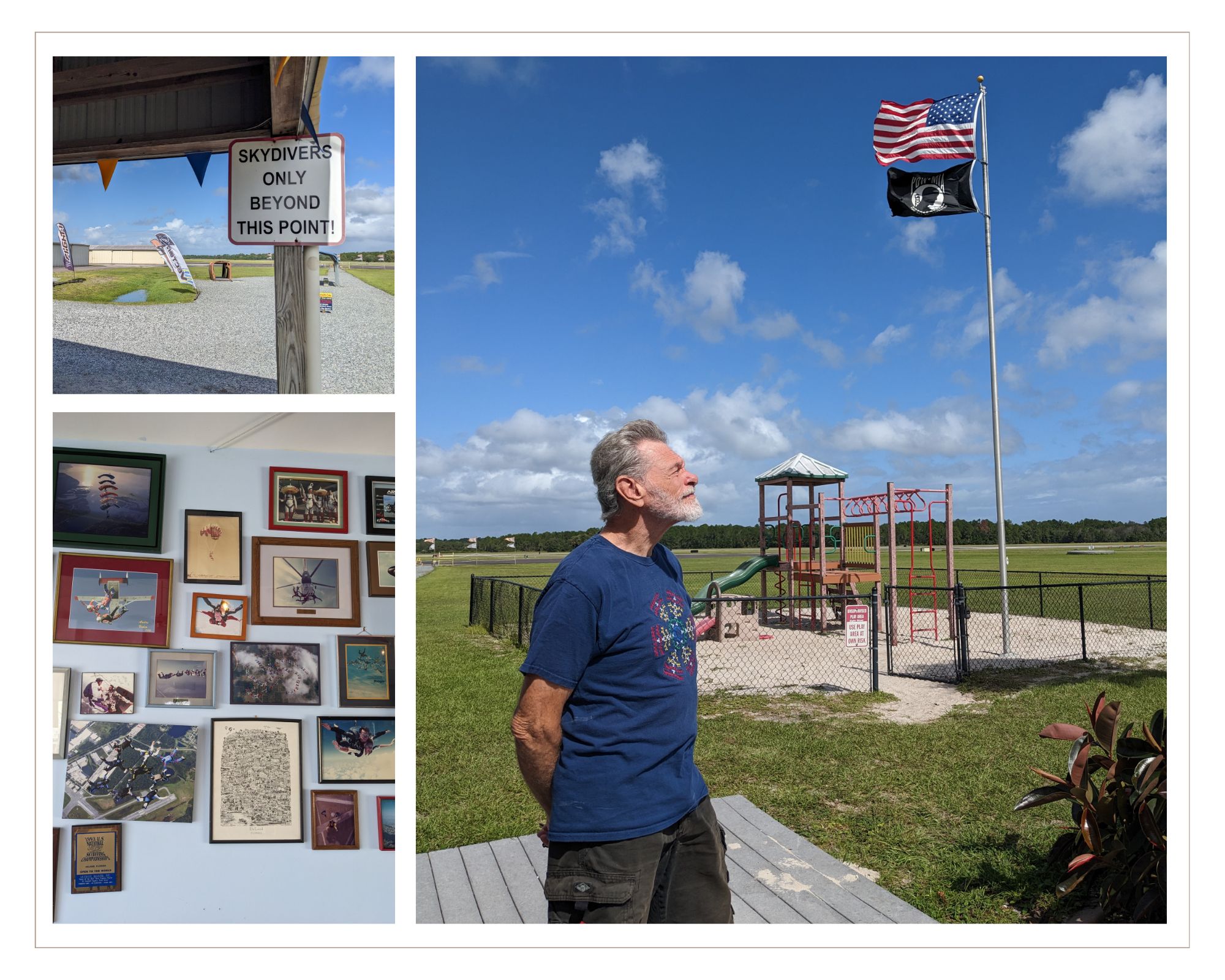
For many residents of DeLand, the airport on the north side of town feels like a world of its own. Planes climb into the sky daily. Parachutes bloom overhead. Visitors arrive from across the globe. What many may not realize is that Skydive DeLand is not only a local attraction. It is one of the most influential skydiving centers in the world.
Skydive DeLand began operations in 1982, taking over a location that had already seen continuous skydiving activity since 1958. From its earliest days, the company was led by competitors at the highest level of the sport. Both founders were National Champions, and one went on to achieve the title of World Champion in four-person team competition.
That competitive ambition changed the sport.
To pursue world-class performance, the founders enhanced the way teams trained. They invested in aircraft, facilities, personnel, and infrastructure that allowed for intensive, structured team training. At the time, very few drop zones operated seven days a week. Skydive DeLand quickly became a full-time operation, open year-round.
As teams discovered the level of support and consistency available in DeLand, they began traveling here from all over the world. What started as a training philosophy became a global destination.
For many years, Skydive DeLand was recognized as the most active skydiving center in the world.
As training programs expanded, so did the industry surrounding them. Equipment manufacturers began relocating to DeLand in order to test new parachute designs and innovations in real-world conditions.
Today, more than 20 skydiving-related companies operate in the DeLand area. Together, they form the largest parachute equipment manufacturing cluster in the world. Skydive DeLand serves as the anchor for that ecosystem.
Manufacturers rely on the consistent jump activity to test new canopies and equipment designs. Similar to how automotive companies rely on test tracks, skydiving manufacturers rely on active drop zones.
The result is that DeLand became known internationally as the Skydiving Capital of the World. Travelers from Europe, South America, and across the United States continue to visit year after year, particularly during the late winter and spring seasons when weather conditions are ideal.
Beyond competitions and equipment development, Skydive DeLand has fostered a global community.
Teams train here for weeks or months at a time. Large events have attracted hundreds of participants. National championships have been hosted here. At any given time, visitors may be staying in local hotels, RVs, or short-term rentals.
That international presence supports tourism, local hospitality, and small businesses throughout DeLand. A past industry census estimated more than 600 jobs connected directly or indirectly to the skydiving and equipment manufacturing sector.
During economic downturns, when other industries struggled, Skydive DeLand remained strong. Tandem jumps and recreational experiences continued to attract visitors. Equipment manufacturing remained active. That stability helped support the broader local economy during difficult periods.
The people who make up the skydiving community are also deeply engaged locally. Many longtime jumpers and industry professionals participate in other civic and community activities throughout DeLand. For those who retire from jumping, many continue to invest their energy in the town they have come to call home.
In 2025, the Skydive DeLand community experienced a devastating loss.
Bob Hallett, one of the two original founders and the majority shareholder of the company, passed away unexpectedly following a traffic accident on his way to work. He had been with the company since its early days and remained actively involved in daily operations.
Bob was not only a business leader but a central figure in the skydiving community. His vision and commitment helped shape Skydive DeLand into the global leader it became. His passing deeply affected employees, jumpers, manufacturers, and longtime friends across the industry.
For a company that has operated as both a workplace and a close-knit community, the loss was profound. Yet the legacy he helped build continues in the culture, the operations, and the global impact of the organization.
One story reflects just how far Skydive DeLand’s reach extends. A local Stetson professor once attended a conference in Taiwan and turned on the television in his hotel room. There was a feature about Skydive DeLand. He returned home surprised to discover that an internationally recognized skydiving center operated just minutes from where he lived.
That story captures something unique about Skydive DeLand. It has put DeLand on the world map, even if some residents are not fully aware of what happens at the airport each day.
Visitors are welcome to observe jumps from the viewing areas or enjoy the adjacent restaurant deck. Others choose to experience a tandem jump. Some begin lifelong careers in the sport. Whether someone comes to watch or to participate, Skydive DeLand remains open and active every day.
For more information, visit SkyDiveDeLand.com to learn about tandem experiences, training programs, and upcoming events.
Skydive DeLand is more than a drop zone. It is a global training center, an innovation hub, and a long-standing contributor to the DeLand community. Its history reflects ambition, resilience, and a deep commitment to both sport and town.

At first glance, a checking account is a checking account. Money comes in, money goes out, and you check the balance when you need to. But the day you start running a business, the rules change, because the risk changes. Business accounts aren’t just “bigger” consumer accounts. They typically handle more transactions, more users, more payment types, and more moving parts.
There’s another key difference many owners don’t realize until it’s too late: business accounts generally do not have the same level of consumer protections that consumer (personal) accounts do. When something goes wrong, the process, timelines, and potential liability can look very different. That’s why fraud prevention for businesses isn’t optional. It’s operational.
Consumer (personal) accounts are usually simpler:
Business accounts are different by design:
And because business accounts are treated differently than consumer accounts, the responsibility to monitor activity and catch issues early often rests more heavily on the business.
Most business owners are busy. Delegating bookkeeping is smart, because your time is valuable. But delegation without visibility is where risk grows, especially when one person has end-to-end control.
Internal fraud often looks like:
It’s rarely dramatic at the beginning. It’s usually quiet, incremental, and designed not to be noticed.
Consider Lisa, who owns a growing medical practice. She hired a bookkeeper to “handle the finances” and assumed monthly reports were enough. Lisa rarely reviewed actual transactions unless something felt off.
Over time, the bookkeeper began issuing checks to a vendor that sounded legitimate. The amounts were small—$180 here, $250 there—coded as routine office supplies. The practice was busy, revenue was strong, and nothing looked “wrong” at a high level.
Six months later, Lisa’s accountant flagged unusual expense patterns during a quarterly review. By then, the total loss wasn’t a rounding error. It was meaningful, and the cleanup took time, created stress, and required uncomfortable conversations. The hardest part wasn’t just the money; it was realizing the problem could have been caught early with simple, consistent oversight.
You don’t need to become your own bookkeeper. You just need a rhythm of review that helps you spot unusual activity quickly, especially because business accounts don’t always come with the same consumer-style protections.
Try these straightforward habits:
Strong habits matter, but systems are what help you scale safely. Depending on your business, ask about tools such as:
Surety Bank can help you evaluate which controls fit your operation, set permissions correctly, and implement tools like Positive Pay in a way that’s practical—not burdensome. The goal is to put guardrails in place that make fraud harder to commit and easier to catch, without slowing down your business.
Residential accounts are often simpler and tend to come with broader consumer-style protections. Business accounts operate differently—more volume, more access, more complexity, and often less built-in protection. That’s why vigilance isn’t just a best practice; it’s part of responsible business ownership.
Fraud prevention isn’t about paranoia. It’s about professionalism: review regularly, limit access wisely, and build systems that protect your business long before problems appear.

For cash-heavy businesses, deposit routines are not just an operations detail. They are a security issue, a controls issue, and often a cash-flow issue. When business cash gets deposited “personally,” meaning an owner or employee deposits cash through personal banking habits or into the wrong account, it can blur your recordkeeping and weaken internal controls. The IRS notes it is a good idea to keep separate business and personal accounts because it makes recordkeeping easier. The U.S. Small Business Administration also emphasizes separating funds by using a dedicated business bank account to keep bookkeeping clean and accurate.
Just as important is the security perspective. Regularly sending someone to the bank with cash exposes employees to real risk, and it creates a predictable pattern that can be exploited. The ABA Banking Journal has noted that too many cash-handling touch points, including trips to the bank, increase risk and can put employees in physical danger. Brink’s similarly points out that employees are exposed to theft risk when transporting cash, and that partnering with trained cash logistics professionals can reduce the risk of theft and increase accountability through secure transport procedures.
Some businesses try to replace bank runs with a courier pickup, but not every courier model is designed for cash. Cash transportation is high-risk, and the best solution is typically a purpose-built cash logistics provider whose job is secure cash handling, documentation, and transport. Trained cash logistics professionals and armored services are structured to reduce theft exposure and strengthen chain-of-custody and accountability, which is fundamentally different from general delivery services.
Surety Bank’s Smart Safe is designed specifically for cash-heavy businesses that want stronger security and a cleaner, more reliable deposit process. Surety explains that, through its partnership with Loomis, Smart Safe lets your business deposit cash on-site, receive provisional credit to your Surety Bank account, and eliminate unnecessary bank runs. From a security standpoint, Surety highlights benefits like real-time tracking of deposits, enhanced security for cash and employees, and better accountability with fewer cash shortages.
From a cash-flow standpoint, Surety’s process is built around speed. You enter the amount, deposit the cash into the Smart Safe device, and Surety provides provisional credit to your business account based on that entry. Loomis also describes provisional credit as daily credit for cash deposits without having to go to the bank, reducing time and helping reduce the risk of robbery outside the store.
If your business handles cash, the goal is to reduce handling, reduce trips, and reduce uncertainty. A strong plan usually includes keeping all business cash activity in business accounts and processes with clear documentation and daily reconciliation, minimizing manual bank runs, and using a Smart Safe with a professional cash logistics partner so deposits are tracked and transport is handled by specialists.
Contact our Treasury Services department today to learn how Smart Safe can help you strengthen security, simplify deposits, and improve visibility into your cash.
For Dan Glenn, Pastor of Stetson Baptist Church in DeLand, Surety Bank has become much more than the place where the church did its banking. Over the years, the initial banking relationship has grown into a partnership centered around a shared commitment to the community.
That partnership took on new meaning in 2018 when Stetson Baptist Church launched Night to Shine, an unforgettable prom experience for people with special needs held in partnership with the Tim Tebow Foundation.
Creating an experience like Night to Shine requires significant support, and Surety Bank was one of the event's earliest sponsors.
“Surety was one that came on very early saying, ‘Hey, we want to support that. We want to be a part of it.’”
For Dan, that moment marked a shift in the relationship. It became much more personal and community focused.
Surety continued supporting Night to Shine year after year, but one experience in particular showed Dan what that partnership truly meant.
After the first Night to Shine, Dan realized the church had never properly thanked Surety for its sponsorship. When it came time to plan the event again, he felt hesitant approaching Surety for another year of support.
The response surprised him.
There was no hesitation. Surety wanted to be involved again.
Years later, that commitment went even further when Surety reached out to the church without being asked and offered to increase its support.
“They have an intention to be generous, even when generosity may or may not be expected or requested.”
For Dan, that willingness to look for opportunities to make a greater impact is part of what distinguishes Surety Bank as a community organization.
Instead of simply waiting for someone to present a sponsorship request, Surety has been willing to ask a different question: How can we do more?
That philosophy extends beyond a single event.
Dan describes Surety not simply as a community bank, but as a “community-centered organization” that genuinely cares about DeLand and the relationships it has built throughout the city.
That personal connection is something Dan has experienced firsthand. His relationship with Surety isn't limited to the organization itself. It's also built through relationships with the people behind it.
As Surety Bank celebrates 100 years, Dan believes that commitment to people and community helps explain why the bank has remained part of DeLand for generations.
Over the past century, both the bank and the city have grown and changed. Yet Surety has continued to serve the community throughout that growth.
For Dan, that's exactly why Surety's 100th anniversary message, “How we've always done it is how we'll always do it,” resonates.
“The way they've always done things has been people centered, relationships centered, community centered.”
Those values create something that goes beyond banking. They create trust. They allow organizations like Stetson Baptist Church to know what to expect from a partner that has consistently shown up before and intends to continue showing up in the future.
After years of partnership, Dan hopes that part of Surety never changes.
This is how Surety Bank has always done it. It's how we will always do it.
For Austin Scott, starting a business wasn’t the result of a lifelong plan. It was something that grew over time, much like the lawns he now helps his customers care for.
Born and raised in DeLand, Austin is the owner of Coastal Green Pest Solutions, a new Volusia County business specializing in lawn treatments, pest management, fertilization, and the care of palms and shrubs.
The company may be new, but Austin is far from new to the work.
Before entering the lawn and pest control industry, Austin was selling auto parts at O’Reilly Auto Parts. Then a landscaper friend suggested he take a job with a local pest control company.
He gave it a shot and discovered an industry that fascinated him.
“I like that I could learn something new every day,” Austin says. “You get to see different problems, and you get to see the benefits of your own labor making a lawn beautiful. You get to see it go from nothing to something.”
Austin spent nearly six years in the industry, gradually developing an understanding of not only what products to use, but why lawns develop problems in the first place.
Interestingly, the work even gave him a new appreciation for a subject he once struggled with: chemistry.
In school, chemistry had never come naturally to Austin. But working with fertilizers, herbicides, insecticides, fungicides, and nutrients gave those concepts a real-world application.
“You get to learn something and then apply it directly,” he says.
And the more Austin learned, the more he realized there was an opportunity to do things differently.
Austin believes one of the biggest shortcomings in the lawn and pest control industry isn't necessarily the products or treatment programs companies use. It's the communication that happens, or doesn't happen, between the company, technician, and homeowner.
A lawn problem can be the result of insects, fungus, nutrient deficiencies, irrigation issues, environmental stress, or a combination of factors. Simply treating the symptom doesn't always solve the underlying problem.
Austin wants Coastal Green Pest Solutions to be different.
“I take pride in being the solution and the end to the revolving door when it comes to these lawn programs,” he says.
That means spending time with homeowners, explaining what is happening on their property, and helping them understand what needs to change.
Austin compares a lawn or landscape to the human body. One problem can affect the health of the entire system. Killing an insect, for example, may address the immediate issue, but it doesn't necessarily explain why the lawn became susceptible to the pest in the first place.
“If you can be the middleman between the problem, the chemicals, and the customer, and you can explain all that smoothly, that's normally the end,” Austin says. “A lot of people don't take the time to talk to their customers and make sure they understand.”
It's an approach built around education and relationships as much as treatment.
When the company Austin had worked for was sold, he saw an opportunity to take everything he'd learned and build something of his own.
Coastal Green Pest Solutions was born.
Today, Austin primarily works with residential customers throughout Volusia County who care about the long-term health and appearance of their properties.
His services include:
Austin's philosophy isn't about simply “spraying and praying,” as he puts it. Every property is different, so understanding what's actually happening comes before recommending a solution.
That philosophy also shapes how he plans to grow the business.
Starting a company requires more than expertise and ambition. There are trucks, equipment, products, operating expenses, and the reality that revenue doesn't necessarily arrive the moment the business opens its doors.
Austin knew he needed some financial breathing room as he got Coastal Green Pest Solutions off the ground.
That's where Surety Bank came in.
Austin first learned about Surety through his father, who had worked in real estate and developed a relationship with Surety Bank CEO Ryan James over the years.
When Austin was preparing to launch Coastal Green Pest Solutions, that local connection opened the door to a conversation.
“I was just looking for a good little loan—something to get me by, that way I had a little bit of breathing room,” Austin says. “I was very questionable on how I was going to make everything work, and honestly, I'm very grateful for Surety stepping in.”
Surety provided a business loan directly to Coastal Green Pest Solutions, giving Austin additional resources and flexibility during the critical early months of building the company.
For Austin, the experience demonstrated one of the advantages of working with a community bank: relationships matter.
Ryan knew Austin's family. He'd seen Austin working around town. And instead of Austin simply being another application, there was an opportunity to understand the person and business behind it.
That trust helped a local entrepreneur take the next step.
Just a couple of months into the business when we spoke with him, Austin already had big ambitions for Coastal Green Pest Solutions.
Eventually, he'd like to have multiple trucks on the road, a dedicated irrigation team, a sales team, and expanded services including home pest and termite control.
But he's in no hurry to grow simply for the sake of getting bigger.
Austin wants to make sure the service and customer experience that distinguish Coastal Green today remain intact as the company expands.
“If I'm not taking the time to personalize your service and making sure that I'm putting down what I'm promising, then there's no point in me opening up the next step,” he says.
He describes his philosophy simply as “natural growth or no growth.”
It's an especially fitting philosophy for someone who spends his days helping things grow.
For now, Austin is focused on building relationships, earning the trust of homeowners and landscapers throughout Volusia County, and developing Coastal Green one customer at a time.
And he's doing it in the community he has always called home.
“I still enjoy the small-town aspect of DeLand,” Austin says. “Raising a family here, having good friends here, it's very nice. DeLand's a good home base.”
As DeLand and Volusia County continue to grow, Austin hopes Coastal Green Pest Solutions will grow right alongside them, without losing the personal relationships that helped get the business started in the first place.
Coastal Green Pest Solutions serves homeowners throughout Volusia County. For homeowners who care about the health and appearance of their lawn and landscaping, Austin and Coastal Green provide personalized lawn treatment, pest management, fertilization, and plant health solutions.
Personal fraud continues to evolve, and scammers are finding increasingly sophisticated ways to target consumers. From AI-powered messages that appear surprisingly convincing to attempts to gain access to entire financial accounts. Recognizing the warning signs is becoming more important than ever.
While you can't prevent every fraud attempt, knowing what to watch for and taking a few proactive steps can make it much harder for scammers to succeed.
Artificial intelligence is making fraudulent calls and text messages feel more personal and legitimate. Scammers can use AI to create convincing communications designed to make you believe you're interacting with a trusted person or organization.
Be cautious when you receive an unexpected call or message asking for personal information, money, or access to an account. Before responding or taking action, reach out to Surety Bank directly to verify they are the ones calling. This step could mean not being scammed out of your money.
Fraudsters are increasingly looking beyond individual credit card numbers and attempting to gain access to entire financial profiles, including personal bank and investment accounts.
Protect your accounts by regularly reviewing activity for transactions you don't recognize and using multifactor authentication whenever it's available. Never provide your password, login credentials, or verification codes to someone who contacts you unexpectedly.
If you notice something unusual in your Surety Bank account, contact us promptly.
Older adults continue to be frequent targets of financial scams, particularly those involving tech support and investment-related schemes.
These scams often rely on urgency or fear to convince someone to act before they have an opportunity to question what's happening. Talk with older family members about common scams and encourage them to check with someone they trust before sending money or providing sensitive information in response to an unexpected request.
Taking a few minutes to verify a situation can help prevent a significant financial loss.
Protecting yourself doesn't require becoming a fraud expert. Start by being skeptical of unexpected requests for money or information, especially when someone pressures you to act immediately.
Use strong, unique passwords and enable multifactor authentication when available. Avoid clicking links in unexpected emails or text messages, and regularly review your bank accounts and credit reports for activity you don't recognize.
Most importantly, trust your instincts. If something doesn't feel right, stop and verify before taking action.
If you'd like to take additional steps to protect yourself, here are three resources worth exploring:
FTC IdentityTheft.gov
Best for someone who thinks their identity has already been compromised. The FTC provides a personalized recovery plan and steps for addressing identity theft.
Visit IdentityTheft.gov
FTC Credit Freeze & Fraud Alert Guide
Customers can place a free credit freeze, which can prevent identity thieves from opening new credit accounts in their name, or add a fraud alert.
Learn About Credit Freezes & Fraud Alerts
Aura
For those interested in a paid protection service, Aura offers identity and financial monitoring tools and other fraud-protection features. I’d position this as an optional third-party tool, not something Surety is recommending over other services.
Explore Aura
These resources are provided for informational purposes. Surety Bank does not endorse or guarantee any third-party product or service.
Fraud tactics will continue to change, but one of your strongest defenses is also one of the simplest: slow down.
Scammers often depend on creating urgency so you act before thinking. If you're unsure about a request involving your Surety Bank account, don't rely on the phone number, link, or contact information provided in the message. Contact Surety Bank directly through a trusted channel.
We're here to help you protect your financial information and recognize potential fraud before it becomes a loss.
For Maria Bonfiglio, working at Surety Bank has always been about more than banking. It's about taking care of people.
Maria has been part of the Surety Bank family for nine years, but her journey began with a simple text message. A former boss she had stayed in touch with reached out years after they had worked together and told her, "I have the perfect job for you." Maria's response was simple: "Where should I sign?"
Nine years later, her enthusiasm hasn't changed.
"I love it. I love my job."
Over the years, Maria's role has evolved, giving her the opportunity to learn new skills and develop deeper relationships with customers. She has gotten to know some of them so well that she can recognize who is calling just by the sound of their voice. For Maria, those relationships are what make Surety feel less like a workplace and more like a family.
That personal connection also shapes the way Maria approaches protecting customers.
When something doesn't seem right, she isn't afraid to ask questions. Whether she's reviewing a check or helping someone resolve an issue with an account, Maria understands that taking a little extra time can make a significant difference.
"We really care about our customers," Maria explains. Even when customers may wonder why the bank is asking additional questions, she wants them to understand the reason behind it. "We don't want them to lose money."
For Maria, that care isn't limited to customers. She has experienced it personally as an employee.
During some of the most difficult moments of her life, including an extended hospital stay and the loss of her son, Maria remembers her Surety family checking on her, visiting her, and making sure she knew she wasn't alone. Those experiences showed her that the relationships Surety talks about aren't simply something customers experience. They're part of the culture inside the bank, too.
It's also why Maria believes Surety Bank has remained part of the community for 100 years. She has worked at other banks, but says Surety's involvement in the community feels different. The bank isn't trying to be the biggest. Instead, it has remained focused on the people and communities it serves.
That same philosophy comes through in Maria's relationships with her customers. Some have developed such a strong connection with her that when they call, they specifically ask for Maria. She takes pride in being someone they know they can turn to when they have a question or need assistance.
After nine years, Maria still says thank you for the opportunity that brought her to Surety Bank. Her story is a reminder that relationship banking begins with people who genuinely care about the people on the other side of the counter or phone.
This is how Surety Bank has always done it. It's how we will always do it.
For Lewis Long III, banking with Surety Bank is a relationship that has lasted more than five decades.
As one of Surety Bank's longest-standing customers, Lewis has watched the bank grow alongside the community since his connection to Surety began more than 50 years ago. He originally opened a savings account after hearing from neighbors that the bank consistently offered strong value and genuinely cared about its customers.
Over the years, Lewis has seen a lot of change. He remembers making deposits with a passbook while employees manually updated balances using a hand-cranked adding machine. What hasn't changed, however, is the way Surety Bank treats the people who walk through its doors.
For Lewis, that commitment extends beyond his own banking experience. When his sons were born, he opened accounts for each of them at Surety Bank, continuing a family tradition that has now spanned generations. One of his sons even participated in the ribbon-cutting ceremony when Surety Bank dedicated its current building in the early 1990s.
Throughout his life of military service, public service, and community involvement, Lewis has always returned to the same bank.
What has kept him loyal all these years?
The answer is simple: people.
"You couldn't ask for better service or better people," Lewis says. "I don't know how they remember everybody's name that walks in the door, but they do. They're just super folks. The people have always been a gift to us and to the community."
Lewis believes that the values Surety Bank was founded on continue to define the bank today. One story from the bank's early history has always stayed with him. During the Great Depression, he recalls hearing that Surety worked with customers rather than rushing to foreclose on them because they cared more about helping people than taking their property. That philosophy, he says, is still reflected in the way the bank serves its customers today.
It's one of the reasons Lewis has become an advocate for the bank wherever he goes.
Whether he's encouraging friends to open a money market account, sharing the bank's history, or even suggesting a new Surety branch for his hometown of Lake Helen, Lewis proudly recommends the bank he's trusted for more than half a century.
"I wouldn't champion the bank if I didn't believe in these folks and believe in this bank," he says. "Everybody is important. They see past whatever's bothering someone that day and still treat people with kindness and respect."
As Surety Bank celebrates 100 years of serving Central Florida, customers like Lewis remind us that while banking has evolved, some things should never change. Genuine relationships, exceptional service, and a commitment to the community remain at the heart of everything we do.
This is how Surety Bank has always done it. It's how we will always do it.
For 100 years, Surety Bank has believed that community banking means more than serving customers inside the walls of a branch. It means investing in the people, organizations, and partnerships that help our communities thrive.
That commitment is something Carla Quann, Director of Community Relations for the Volusia Sheriff's Office, has experienced firsthand.
"Our goal is to support everyone in our community," Carla explains. "Ryan [James] wanted to be a part of what we're doing because he cares about the community."
The partnership between Surety Bank and the Volusia Sheriff's Office began when Surety Bank President & CEO Ryan James joined the Volusia Sheriff's Foundation Board. Since then, the relationship has grown into a collaborative effort focused on addressing some of the community's greatest needs.
One example came during the holiday season, when thousands of local families faced uncertainty after SNAP benefits were unexpectedly interrupted. Through the combined efforts of businesses, volunteers, and community organizations, more than 3,500 grocery bags were distributed to families throughout Volusia County.
According to Carla, Surety Bank was an important part of making that effort possible.
Beyond community events and charitable initiatives, the partnership has also helped strengthen public safety.
As financial scams targeting older adults became increasingly common, Surety Bank worked alongside the Sheriff's Office to provide education, share industry expertise, and help detectives better recognize the warning signs of fraud.
That collaboration ultimately helped lead to the creation of the Volusia Sheriff's Office Financial Crimes Unit—a dedicated team focused on protecting residents from fraud and financial exploitation.
Working together, those efforts have helped recover more than $2 million for local victims of financial crimes.
For Carla, those results reflect what makes Surety Bank different.
"They're not just another hometown bank," she says. "They care about their community."
She believes that commitment starts with customer service but extends far beyond banking. Whether supporting nonprofit organizations, helping law enforcement address emerging scams, or simply answering the phone when someone needs help, Surety Bank has built relationships rooted in trust.
"People trust them," Carla says. "They've built that trust with their customers, and that's why people stay."
As Surety Bank celebrates a century of serving Central Florida, partnerships like this demonstrate that community banking isn't defined only by financial services—it's measured by the impact a bank has on the people and communities it serves.
For 100 years, Surety Bank has believed that when communities succeed, everyone succeeds. Through partnerships built on trust, service, and shared purpose, that commitment continues today—and will continue for generations to come.
Community
Personal Banking, Online Banking


Surety Bank continually works to provide greater accessibility to all of its products and services. If you have any questions about accessible banking, call us at 386-734-1647
© 2026 Surety Bank